Plant Care Resources

How to Mulch Trees and Shrubs

Content Detail

Mulching plants is both functional and decorative. Mulch is typically an organic material spread on the soil surface to protect roots from heat, cold, and drought, and to provide nutrients to plants as the mulch decomposes.

Once you have chosen the right plant for a given site and followed the proper planting procedures, you should mulch the plant and create a stable environment for root growth.

When to Mulch

Timing the use of mulch is important, because mulch insulates soil temperatures and maintains moisture.

Mulch should not be applied in spring until the soil begins to warm and excess moisture has drained away. Applying mulch to cold, wet soil will keep it cold and wet, and that can slow plant growth.

When applying mulch in fall, wait until the soil starts to cool off. Air temperatures will cool before soil temperatures do. Once cooler air temperatures and frosts are occurring on a regular basis, it is safe to assume that soil temperatures are cooling as well. One frost alone does not indicate a cooling of the soil. Air temperatures often rebound and stay warm for a length of time after a single frost.

How to Mulch Trees and Shrubs

Under trees and shrubs, spread mulch to a recommended depth of 3 to 4 inches for medium-to coarse-textured materials. Perennial beds need only a couple of inches of mulch.

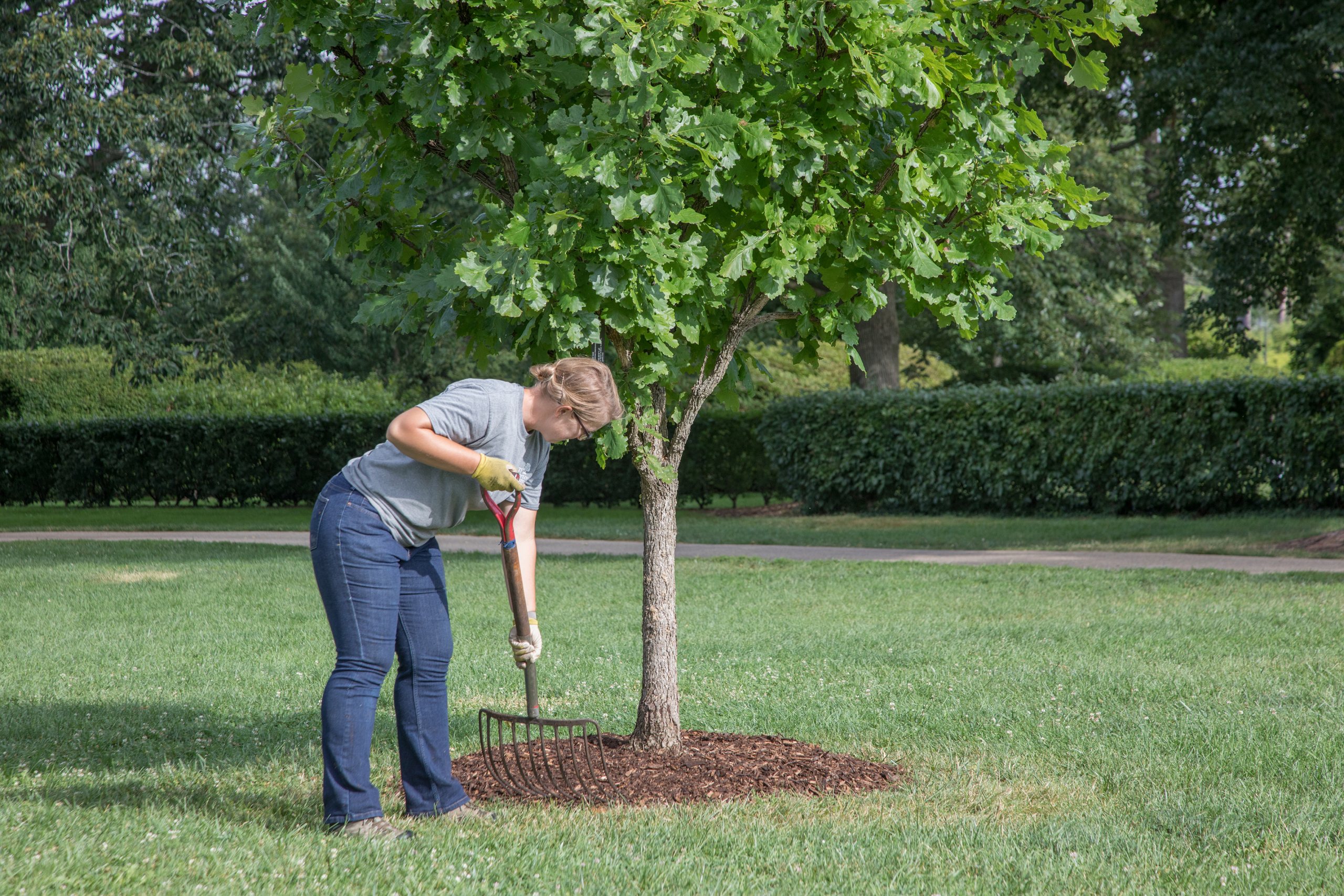
Spread and pull mulch away from the bases of tree and shrub trunks, creating a donut-hole around the trunk.

Ideally, the mulched area around a tree should extend to the drip line of the branches on a younger tree, and at least cover a four to five foot diameter area around the trunk on older, larger specimens. The larger the mulched area, the more beneficial the mulch will be.

Check the mulch depth annually and replenish mulch as necessary.

The proper way to mulch is to spread mulch away from the base of the trunk.

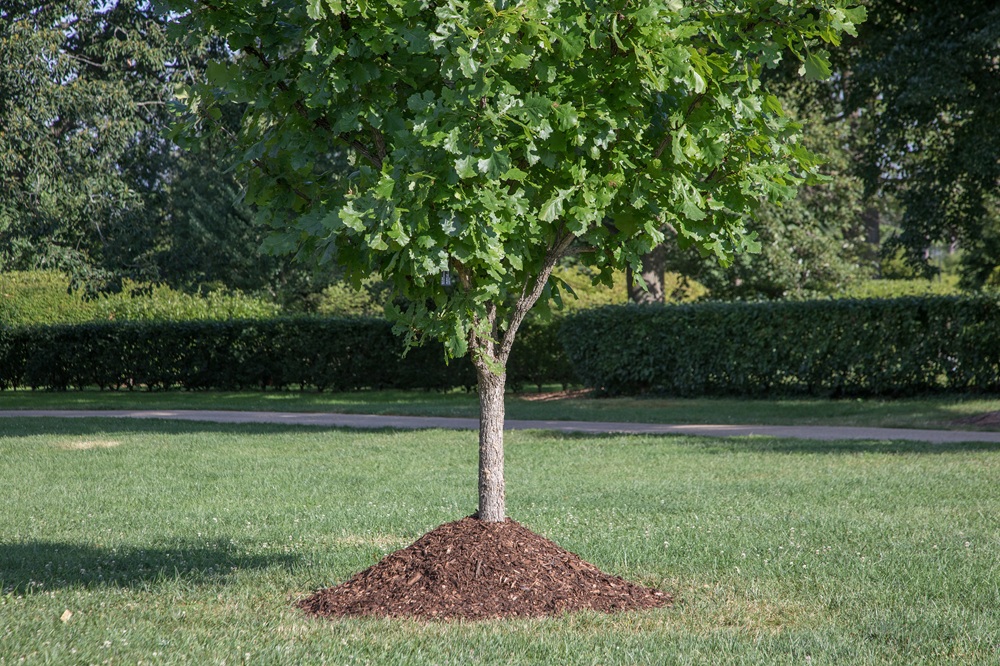
Do not pile mulch up against the trunk. This is known as “volcano mulching.” Excessive mulch on the trunk causes moisture to build up, creating ideal conditions for insect pests, diseases, and decay.

Incorrect “volcano mulching”

Why Use Mulch?

Mulch provides many benefits to plants in the landscape.

Mulch Provides a Layer of Insulation

Mulched soils are warmer in winter and cooler in summer than bare soils. Roots are protected from temperature extremes. Freezing and thawing of the soil in winter can cause plants to heave up and expose part of their root system to the air. Mulch can minimize the amount of freezing and thawing that occurs.

MulchConserves Soil Moisture

When unmulched soil surfaces heat up in summer, water can be lost to evaporation. This can cause roots to dry and become damaged. A layer of mulch reduces moisture loss by preventing sunlight from reaching and heating the soil. Mulch also reduces loss of soil moisture from evaporation by wind. Soil moisture is conserved, and this can reduce the need for watering.

Over Time, Mulch Improves the Soil’s Physical Structure and Fertility

As mulch breaks down, it adds organic matter to the soil. This improves the soil’s ability to hold water in the root zone, while allowing excess water to drain out of heavy clay soils. Soils with good structure are easier to dig. They also allow roots to grow more readily into the surrounding soil, spreading out from the root ball of the plant. The decomposition of the mulch over time also releases nutrients into the soil.

Mulch Prevents Erosion and Water Runoff

Bare soil disperses or breaks apart when impacted by rain or sprinkler droplets. Mulch protects soil from being eroded and reduces water runoff by providing an absorptive surface that slows and absorbs water.

Mulching Can Reduce Competition from the Roots of Weeds and Other Plants

Most of a tree’s fine roots are in the upper 18 to 24 inches of soil. Applying mulch under trees and shrubs reduces competition for water and nutrients by weedy plants. Lawn roots are also very competitive for water and nutrients, so having mulch under a tree instead of lawn frees up those resources for trees.

Additional Benefits of Mulch

Mulch creates a safety zone around trunks, protecting them from damage by lawn mowers and string trimmers. It offers a more natural appearance to the landscape. It provides a favorable environment for soil insects and other organisms that benefit soil structure and fertility.

Selecting an Organic Mulch

Several factors should be considered when choosing from different types of organic mulch.

Resistance to Compaction

Medium-textured mulch is best. Fine-textured mulches tend to pack down and retain moisture, trapping it instead of letting it reach the roots of the plants. Coarse-textured materials may be too porous to hold adequate amounts of water. They are resistant to compaction, but very coarse materials can float out of the planting beds and into lawns and driveways.

Appearance

The type of mulch used is a personal preference in terms of appearance. Mulch can vary greatly in this regard. Choose a mulch that appeals to you. Consider the uniformity and color of the mulch. Consider how the mulch will look in the areas you plan to use it. Also, consider if the mulch will look good near your home. A mulch that looks appealing in a nursery yard may strike a sharp contrast with the color of the home.

Longevity

Mulches vary as to how long they will last in the landscape. Fine-textured mulches, especially those that have been ground, may decompose more quickly and reduce the longevity of the mulch. Some mulches like finely ground compost and cocoa bean shells may not last a full growing season, while others, like hardwood chips, may last a full year.

Cost

Consider how much money you want to spend on mulch. Different mulches can vary in cost. Buying in bulk can save money versus buying individual bags. Some mulches may be available at no cost from municipalities.

Types of Organic Mulch

There are many types of organic matter that can be used as mulch. Here are some of the common types readily available.

Hardwood Bark

Shredded bark can be purchased as bags of small or large chips. It’s long-lasting. Very large bark chips may be prone to floating out of the planting bed during a heavy rain storm.

Hardwood Chips

These are readily available and often free from municipal sources. Wood chips can hold water better than bark chips. They can also be long-lasting.

Shredded Leaves

Every autumn, nature provides free mulch in the form of fallen leaves. Leaves can be raked into planting beds and under trees and shrubs. They can be used whole or shredded. To shred or not is a personal preference. Leaving the leaves intact may provide winter protection for some native insects, but it can also give the same protection to insect pests and ticks. During winter, leaves may partially decompose and start to filter into the soil.

Compost (Commercial Products and Home-Made)

Compost may best serve in the role of soil amendment, but it can be used as mulch. Since compost is already fairly decomposed when purchased from a store or harvested from a home compost pile, it may break down more quickly than other mulches. The benefit of that is faster infiltration of the organic matter into the soil to provide nutrients and improve soil structure. The downside is that the mulch may not last all season.

Pine Needles

Pine needles make an attractive mulch choice. They tend to not mat down and remain more light and airy, allowing water and air to penetrate to the soil. Contrary to popular belief, pine needles and evergreen needles, in general, do not make soil more acidic. As these needles break down, their pH becomes more neutral (less acidic).

Cocoa Bean Shells

Cocoa bean shells are very popular with many gardeners because they look good and smell good—like chocolate. There is a concern with this product. Cocoa bean shells, like chocolate, contain theobromine and caffeine, which can make dogs sick.

Grass Clippings

Clippings from the lawn should be dried or composted before using. Avoid using clippings from a lawn that has been treated with fungicides, insecticides, or herbicides. Lawn clippings can be used alone, but mixing them with other materials can increase porosity and reduce matting. Grass is a good source for nitrogen, but too many grass clippings piled together can produce an ammonia smell.

Composted Leaf Litter (Leaf Mold)

While a good source of nutrients, it may contain weed seeds, depending on the species of plants included in the mix.

Mushroom Compost

This is a very popular and available product, but there are some concerns to note. Mushroom compost can be quite variable in its content, and there may be differences among the various products being marketed as mushroom compost. Some mushroom compost can have a high soluble salts content. Used regularly and by itself, it may cause problems for some plants. For best results, it should be used in moderation and mixed with other organic matter.

Evergreen Boughs

Cut branches from evergreens are not a typical mulch, but they can be used to lightly cover less hardy perennials in winter.

Sawdust

Sawdust is fine textured and can pack down and hold too much water. When dry, sawdust may blow away in heavy winds. Compost sawdust first or mix it with other organic matter before applying. Do not use sawdust from treated lumber.