What Does Spring Sound Like?
As spring arrives, you’ll see new things: touches of green in the treetops, the first few flowers, turtles in ponds. You’ll hear new things, too. Listen for the sounds of spring at The Morton Arboretum.
Frogs and Toads Call
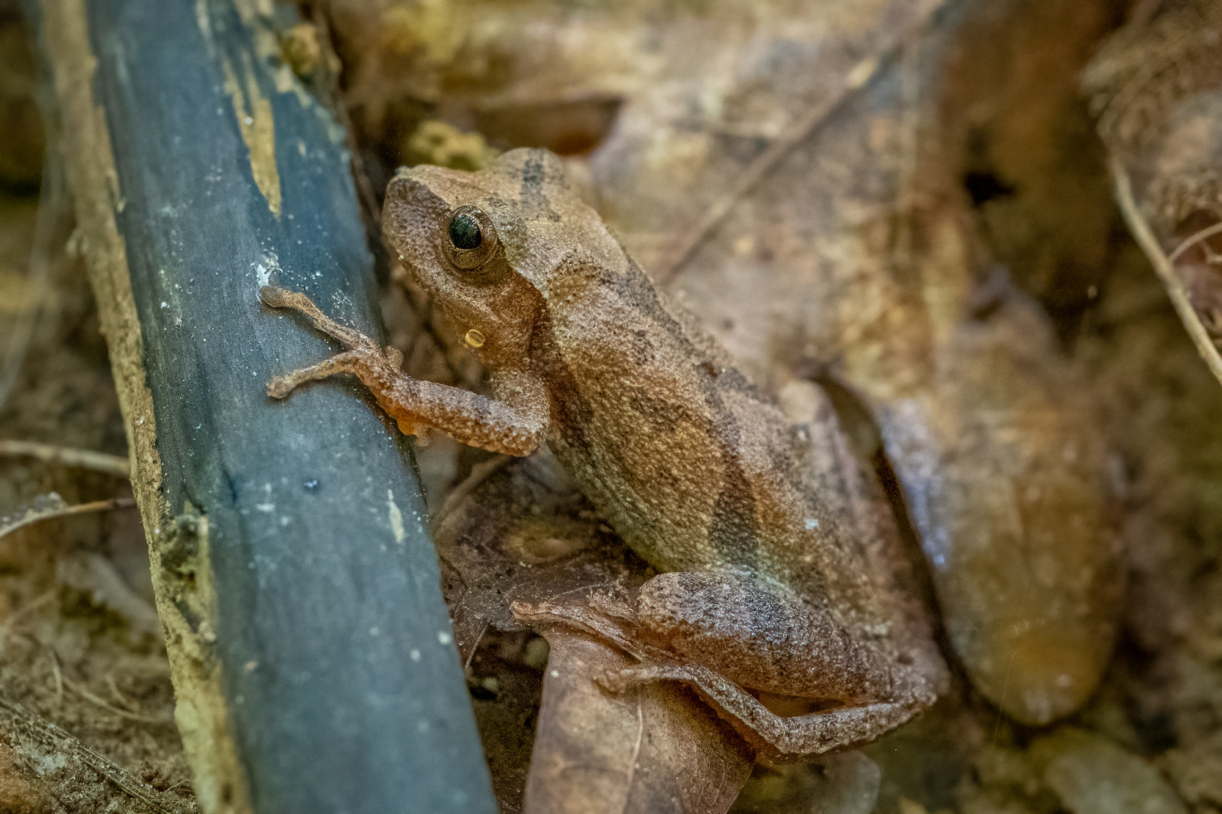
In early spring you’re likely to hear a high-pitched sound in the wetlands and woods of The Morton Arboretum. It’s the mating call of a spring peeper—a tiny frog, about an inch long, that lies near lakes, seeps, and marshes.
Like many frogs, spring peepers spend the winter partly frozen in burrows underground. When they warm up in spring, they start looking for love.
How does a frog find a mate? The male frog sings. To amplify the sound, he inflates his throat with air until the skin of his neck stretches out like a balloon. He then cuts loose and lets out a song that may carry for up to a mile.
By mid-March, the cheeps of spring peepers combine with the songs of other frogs into a high-pitched, pulsing wall of sound. Gray tree frogs chatter like little monkeys. American toads trill. The mating call of the American bullfrog is a low, long, growling grunt. And that high-pitched whirring like summer cicadas? Those are the sounds of boreal chorus frogs.
Once they’ve mated, female frogs and toads will lay their eggs in water, either in standing wetlands or in ephemeral woodland ponds that only form in the spring.
Soon, the eggs will hatch into tadpoles, like the tadpoles of American toads that can be found later in spring at Wonder Pond in the Arboretum’s Children’s Garden. Gradually, the tadpoles become grown-up toads and frogs that will be ready to join the chorus in the following spring.
Birds Sing
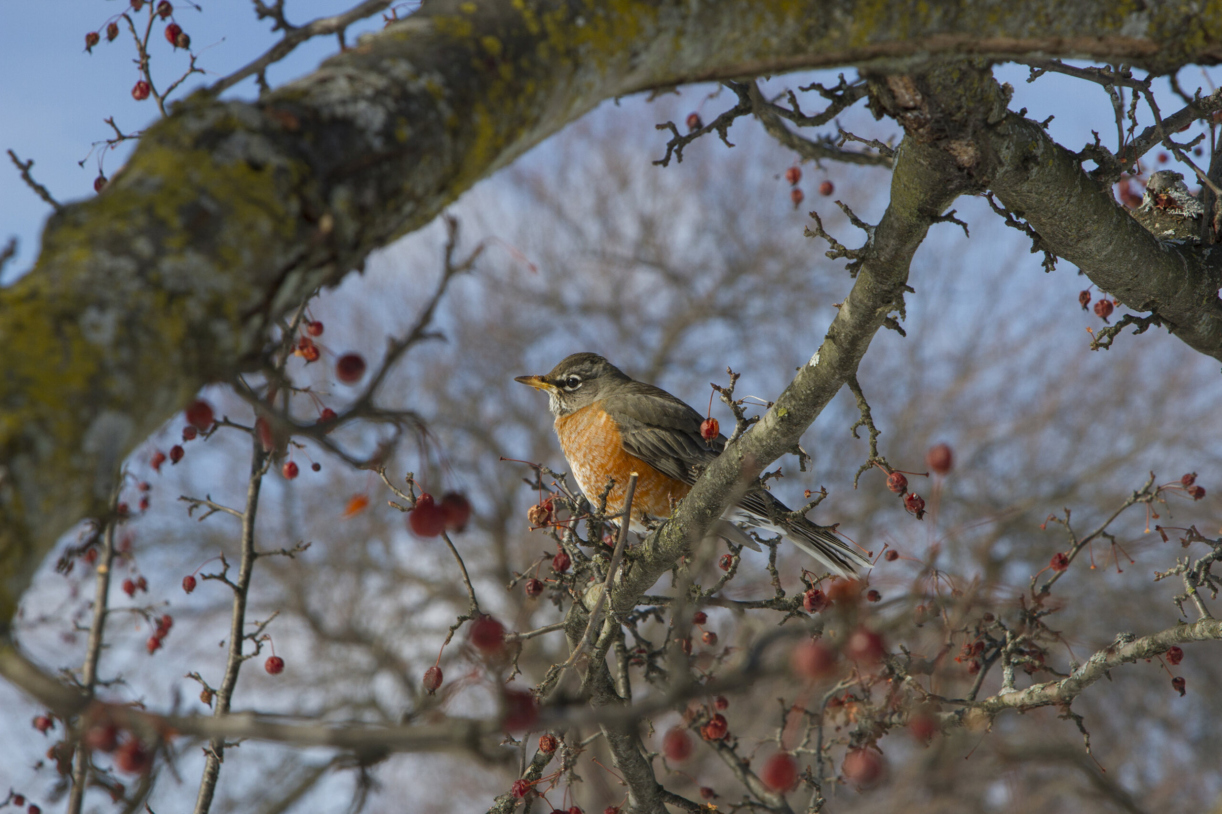
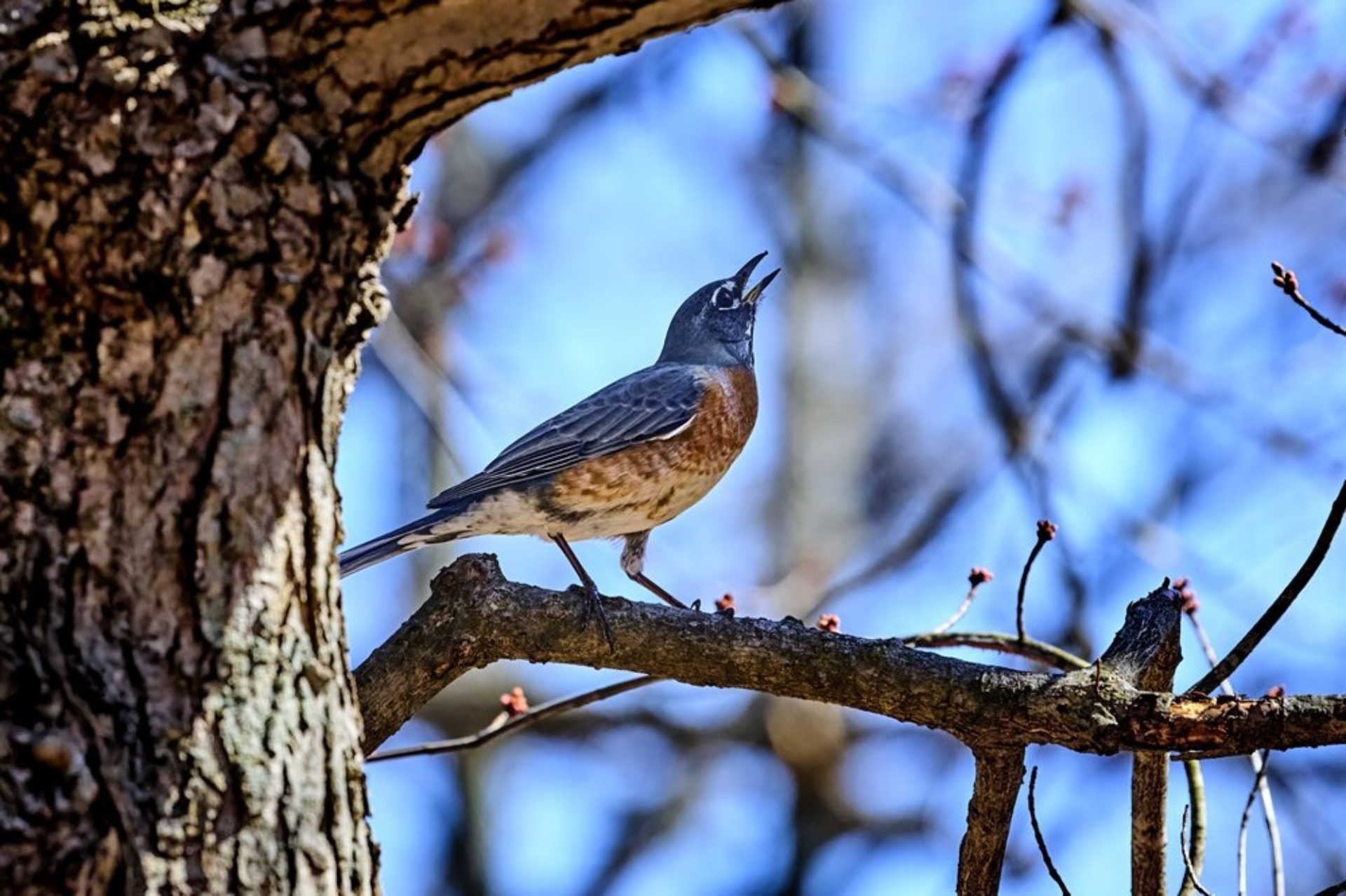
Birdsong swells in spring as overwintering species such as Northern cardinals, American robins, black-capped chickadees, and belted kingfishers build their nests. Red-headed woodpeckers clatter and cackle as they drill bugs from tree trunks to feed their young. Eastern bluebirds call out as they arrive from farther south and start to build nests in tree cavities and in nest boxes installed at the Arboretum. Mallards and other ducks can be heard honking in ponds and lakes. You will certainly hear the shrill complaints of red-winged blackbirds defending their nests around Meadow Lake.
Many birds pass through the Arboretum in spring as they migrate along the Mississippi Flyway–the great route in the air that runs from the Gulf of Mexico along the Mississippi River and up the Great Lakes to Hudson’s Bay in Canada. Some birds come to stay for the summer to nest and breed; some are just passing through.
Starting in early spring you will hear a wide range of bird calls from arriving species, such as the light trill of the Eastern kingbird, the tuneful caroling of the black-and-orange Baltimore oriole, and the chirping song of the bright-blue indigo bunting.
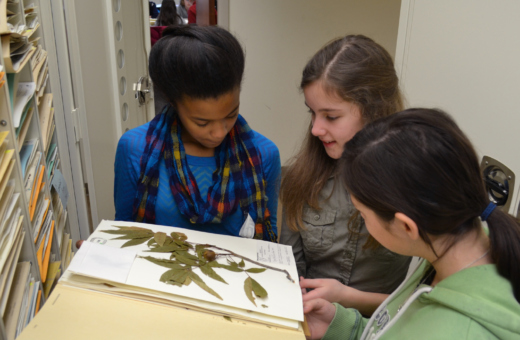
You can begin learning to distinguish the sights and sounds of spring birds at the Arboretum in the class Field Study: Birds of Spring, April 25 through May 16, or at a monthly session of the Arboretum’s guided Bird Walks. These are just two of the many classes the Arboretum offers to help you deepen your experiences of nature at the Arboretum and everywhere.
Wind Whispers
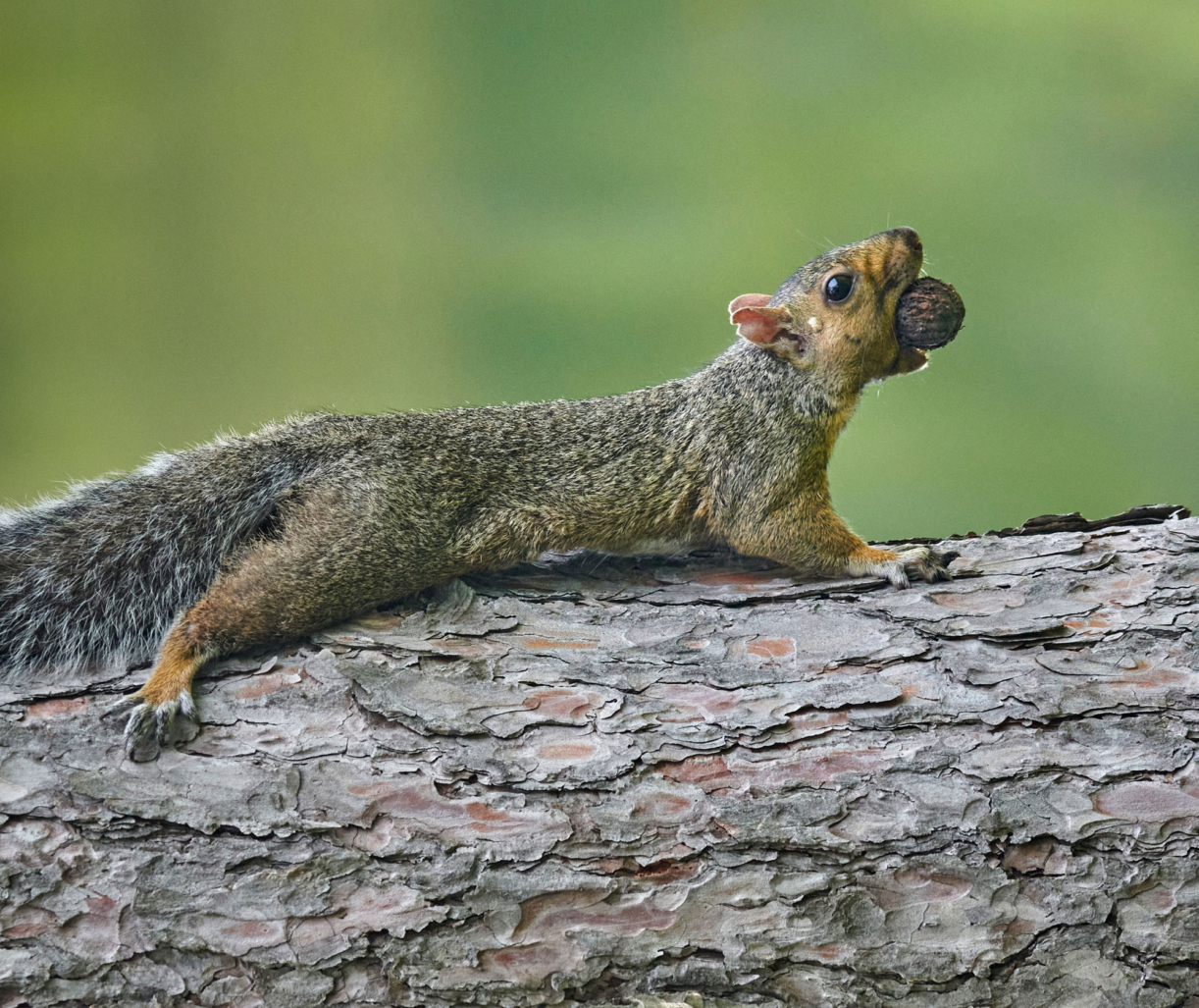
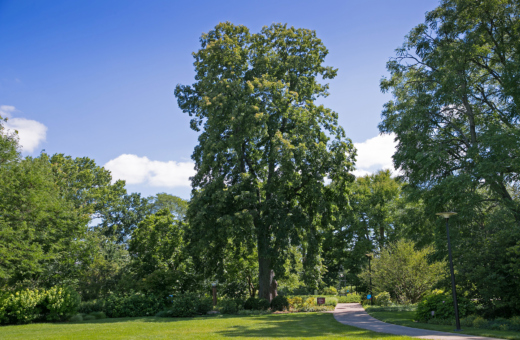
When buds open and leaves unfurl to cloak the once-bare branches of trees, they change the sound of the woods. On windy days, you’ll hear swishing and whispering as branches brush. On windless days, the leaves help hush the outside world, so that the chitter of chipmunks and squirrels is easier to hear.
As you stroll the paths and trails of The Morton Arboretum to enjoy all the blooms and beauty of the season, keep your ears as well as your eyes open and enjoy the sounds of spring.