A Bold New Idea for a Tree-Filled City
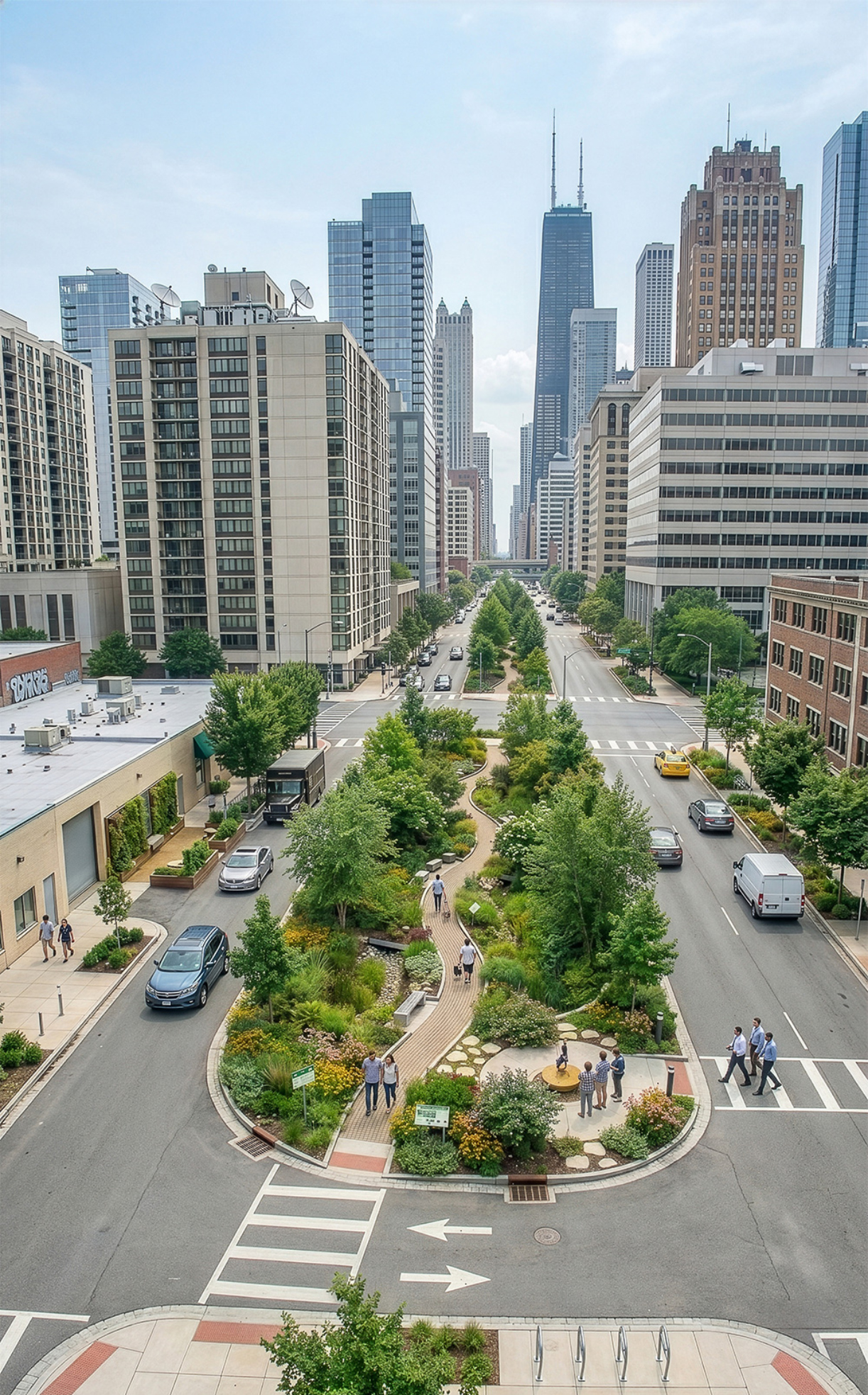
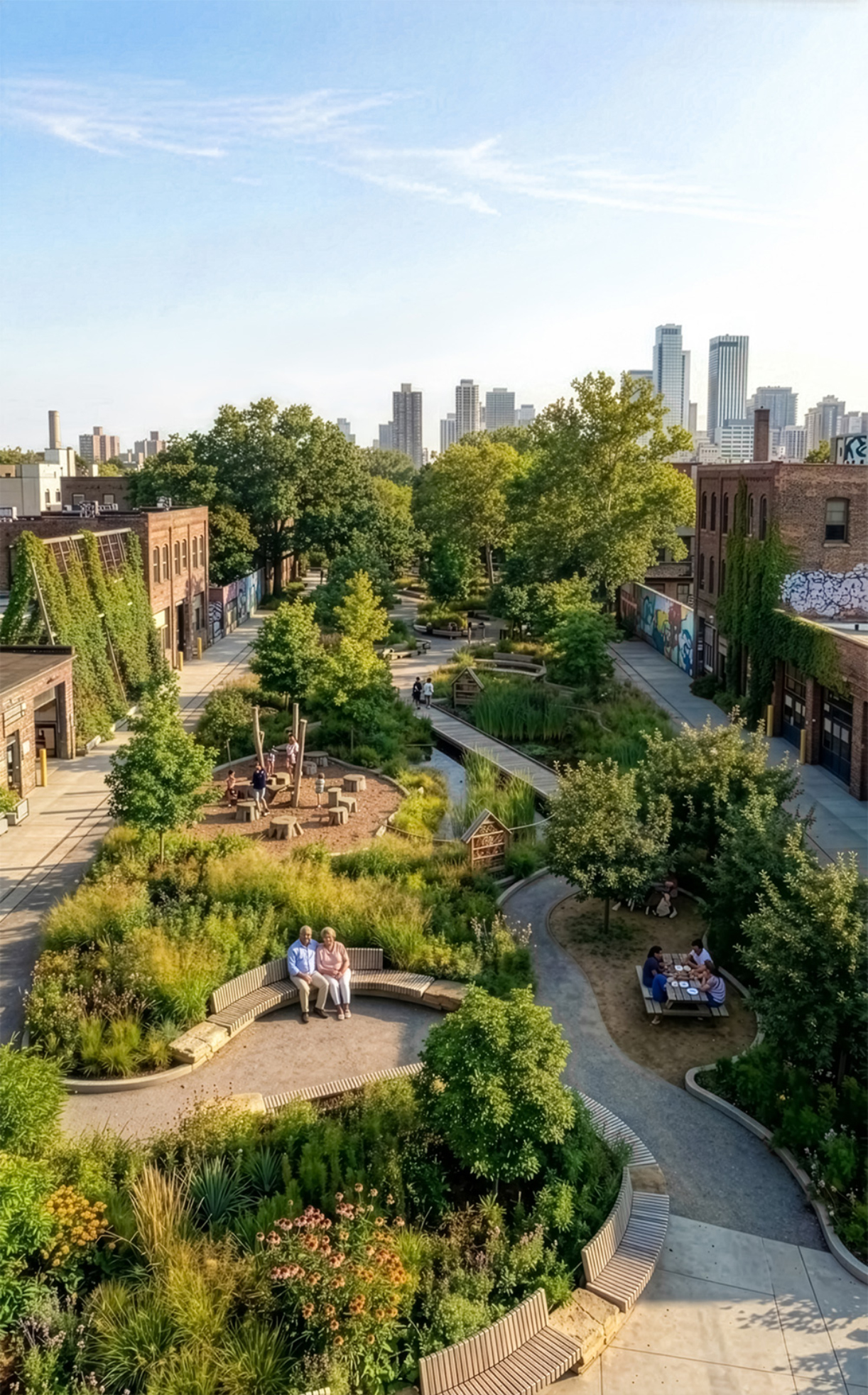
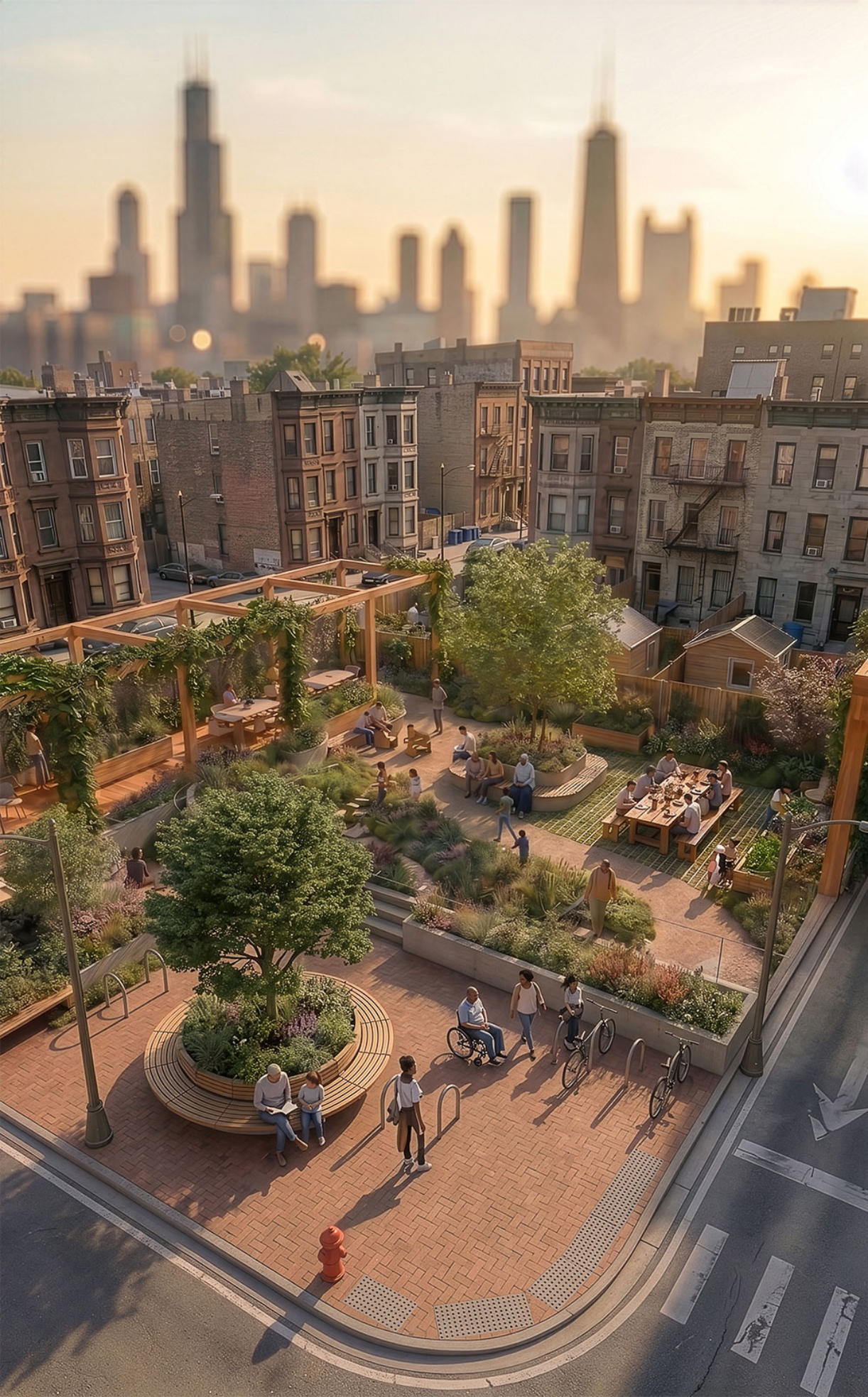
Green spaces in every neighborhood, planned by local communities and reflecting the city’s cultural richness, designed around trees. Trees for everyone, to help mitigate pollution and flooding, and to support walking, gardening, and relaxing in daily life.
That’s the vision behind “Green City Rising: People and Trees Thriving Together,” The Morton Arboretum’s submission to World Business Chicago’s competition, Horizon Lines: Visions for Chicago 2050. World Business Chicago announced Wednesday, June 3, that “Green City Rising” was among just six finalists selected from about 200 submissions.
The Horizon Lines competition is intended to stimulate bold new ideas to shape Chicago’s future over the next 25 years. The finalists’ concepts will be exhibited this summer at the Chicago Cultural Center in downtown Chicago, and the overall winner will be announced in September.
The “Green City Rising” vision is based around community arboreta—collections of living trees. Historically, an arboretum has been a collection of trees planted, curated and labeled for scientific purposes, such as the tree collections at The Morton Arboretum in west suburban Lisle.
But many kinds of tree-filled places can be arboreta. Parks, schoolyards, cemeteries, and municipalities have been certified as arboreta through the Arboretum’s ArbNet program. For example, Palmer Square Park on the West Side is a certified arboretum, and the Chicago Park District encourages communities to work to have their local parks designated as arboreta.
“Green City Rising” builds on this experience to imagine such tree-filled places throughout Chicago, especially in neighborhoods where trees are needed most. Research conducted through the Arboretum’s Chicago Region Trees Initiative has found that large areas of the city, especially on the South and West Sides, lack trees and therefore are missing out on the many benefits that trees provide. Distributing trees more equitably is a big part of the “Green City Rising” vision.
“Chicago is a city that ‘makes no little plans,’” said Jill Koski, the Arboretum’s president and CEO. “Green City Rising’ is not simply about planting trees—it’s about Chicago thriving through people and trees. This vision exemplifies Chicago’s motto as a City in a Garden.”
Climate pressures are intensifying, with more heat waves and storms in the Midwest. Population dynamics in the city are also shifting. Just as forests adapt over time, the city must find new ways to meet new needs.
Thriving, mature trees will strengthen neighborhoods as places of stability, opportunity and belonging. “They are essential civic infrastructure, and they are the only kind of infrastructure that increases in value over time,” Koski said.
“Green City Rising” proposes meeting some of the city’s new developing needs with tree-filled community-based green spaces, designed through local partnerships, like the Arboretum’s collaboration with Our Roots Chicago and the Chicago Park District.
The Arboretum’s concept and other finalists will be on display at the Chicago Cultural Center Wednesday, June 3, through Friday, September 18, 2026, with opportunities for public comment until Friday, July 24. World Business Chicago will announce the winning vision Tuesday, September 15.