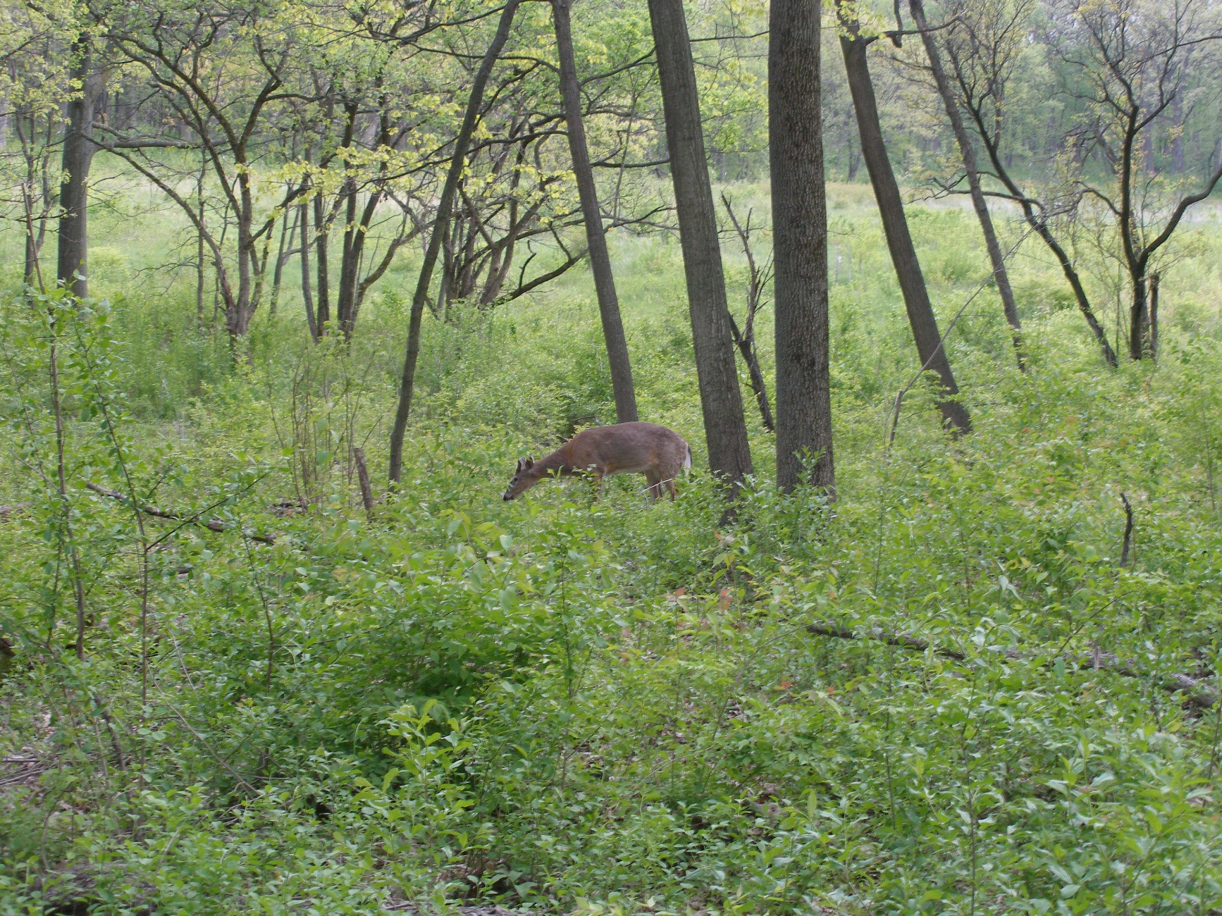
How to Keep Deer from Eating Plants
There are several ways to discourage deer from viewing your yard or garden as a source of food and refuge. While fencing, repellents, and predators may work, what you plant can also help keep these herbivores away.
Fencing
You can physically restrict deer by enclosing your entire yard or garden in fencing at least 8 feet tall. If you only have a few trees or shrubs to protect, you can put barrier fencing around these individual plants. Metal wire cages placed around individual plants will help deter deer from browsing, provided the cage is tall enough to prevent deer from reaching over the top. Protecting trees with plastic collars and tree guards in late summer may provide some protection from deer rubbing. Be sure to remove any trunk guards or collars in spring to allow the trunk to expand normally and avoid damage to the trees. Cost and aesthetics are the major drawbacks to this option.
Repellents
Commercial repellents can be used to discourage deer, but their efficacy and success are based on several factors. Most have a bitter taste or foul odor, which discourages deer from feeding. Snow and rainfall can dissipate some materials so reapplication is frequently needed. Some repellents simply do not weather well even without rain. If food sources are scarce, deer may simply ignore the repellents, despite the taste or odor. Repellents may discourage deer from browsing, but won’t prevent antler rubbing by males.
Deterrents
A large, noisy dog is a good deer deterrent. If you don’t have a dog, you can hang shiny tape or strips from branches, or place inflated balls, whirligigs, or other moving objects in the yard to startle deer with sudden movement. You’ll have to rotate these frequently, however, or deer will soon realize that they are not in danger from these objects. Bird netting placed over shrubs in winter may afford some protection. Netting should be removed in spring when new growth begins
Deer-Resistant Plants
If they are starving and food is scarce enough, deer will eat almost anything. There are a number of plants, however, that deer don’t find especially palatable. Using these plants in your landscape is often the most cost-effective, least time-consuming, and most aesthetically pleasing solution.
Deer-Resistant Trees
These are plants that deer find less palatable. If food is scarce, deer may still browse on these plants.
Common Name (Scientific Name)
Bald-cypress (Taxodium distichum)
Beech (Fagus spp.)
Birch (Betula spp.)
Black locust (Robinia pseudoacacia)
Catalpa (Catalpa spp.)
Chestnut (Castanea spp.)
Dawn redwood (Metasequoia glyptostroboides)
Giant arborvitae (Thuja plicata)
Ginkgo (Ginkgo biloba)
Honey-locust (Gleditsia triacanthos)
Ironwood (Ostrya virginiana)
Japanese tree lilac (Syringa reticulata)
Katsura tree (Cercidiphyllum japonicum)
Larch (Larix spp.)
Pawpaw (Asimina triloba)
Redbud (Cercis canadensis)
Sassafras (Sassafras albidum)
Smoke tree (Cotinus spp.)
Sourwood (Oxydendrum arboreum)
Sweet-gum (Liquidambar styraciflua)
Spruce (Picea spp.)
Sycamore (Platanus occidentalis)
Tulip tree (Liriodendron tulipifera)
Deer-Resistant Shrubs
These are plants that deer find less palatable. If food is scarce, deer may still browse on these plants.
Common Name (Scientific Name)
Bayberry (Myrica pensylvanica)
Bluebeard (Caryopteris clandonensis)
Bottlebrush buckeye (Aesculus parviflora)
Boxwood (Buxus spp.)
Carolina allspice (Calycanthus floridus)
Coralberry, Snowberry (Symphoricarpos spp.)
Forsythia (Forsythia spp.)
Panicled hydrangea (Hydrangea paniculata)
Leatherwood (Dirca palustris)
Lilac, common (Syringa vulgaris)
Oregon grape-holly (Mahonia aquifolium)
Smoke bush (Cotinus spp.)
Spicebush (Lindera benzoin)
Spirea (Spiraea spp.)
Sumac, fragrant (Rhus aromatica)
Witch-hazel (Hamamelis spp.)
Deer-Resistant Ground Covers
These are plants that deer find less palatable. If food is scarce, deer may still browse on these plants.
Common Name (Scientific Name)
Barren strawberry (Waldsteinia fragarioides)
Bergenia (Bergenia cordifolia)
Bugleweed (Ajuga reptans)
Bunchberry (Cornus canadensis)
Catmint (Nepeta x faassenii)
Epimedium (Epimedium spp.)
Ferns (numerous species)
Hens and chicks (Sempervivum spp.)
Juniper (Juniperus spp.)
Lady’s mantle (Alchemilla mollis)
Lamium (Lamium spp.)
Leadwort (Ceratostigma plumbaginoides)
Lily of the valley (Convallaria majalis)
Lily turf (Liriope spicata)
Lungwort (Pulmonaria spp.)
Mosses (numerous species)
Pachysandra (Pachysandra spp.)
Potentilla (Potentilla spp.)
Sedum (Sedum spp.)
Snow-in-summer (Cerastium tomentosum)
Sweet woodruff (Galium odoratum)
Vinca (Vinca minor)
Violet (Viola spp.)
Wild ginger (Asarum canadense)
Wild strawberry (Fragaria spp.)
Deer-Resistant Perennial Vines
These are plants that deer find less palatable. If food is scarce, deer may still browse on these plants.
Common Name (Scientific Name)
Akebia (Akebia quinata)
Bittersweet, American (Celastrus scandens)
Boston ivy (Parthenocissus tricuspidata)
Clematis (Clematis spp.)
Grape (Vitis spp.)
Honeysuckle (Lonicera spp.)
Trumpet creeper (Campsis radicans)
Virginia creeper (Parthenocissus quinquefolia)
Wisteria, American (Wisteria frutescens)
Wisteria, Kentucky (Wisteriamacrostachya)
Deer-Resistant Annuals and Biennials
These are plants that deer find less palatable. If food is scarce, deer may still browse on these plants.
Common Name (Scientific Name)
Ageratum (Ageratum houstonianum)
Alyssum (Lobularia maritima)
Flowering tobacco (Nicotiana hybrids)
Forget-me-not (Myosotis spp.)
Four o’clock (Mirabilis jalapa)
Foxglove (Digitalis purpurea)
Heliotrope (Heliotropium arborescens)
Larkspur (Delphinium spp.)
Lobelia (Lobelia spp.)
Marigold (Tagetes spp.)
Mexican sunflower (Tithonia rotundifolia)
Mimulus (Mimulus spp.)
Moonflower (Ipomoea spp.)
Morning glory (Ipomoea spp.)
Nasturtium (Tropaeolum majus)
Petunia (Petunia spp.)
Poppy (Papaver spp.)
Salvia/sage (Salvia spp.)
Snapdragon (Antirrhinum majus)
Stocks (Matthiola spp.)
Sunflower (Helianthus annuus)
Sweet William (Dianthus spp.)
Vinca, annual (Catharanthus roseus)
Deer-Resistant Perennials
These are plants that deer find less palatable. If food is scarce, deer may still browse on these plants.
Common Name (Scientific Name)
Anemone (Anemone spp.)
Astilbe (Astilbe spp.)
Bee balm (Monarda spp.)
Bergenia (Bergenia cordifolia)
Bigleaf goldenray (Ligularia dentata)
Black-eyed Susan (Rudbeckia hirta)
Bleeding heart (Lamprocapnos spectabilis)
Butterfly weed (Asclepias tuberosa)
Candytuft (Iberis sempervirens)
Columbine (Aquilegia spp.)
Coreopsis (Coreopsis spp.)
Cranesbill (Geranium spp.)
False indigo (Baptisia australis)
Fleabane daisy (Erigeron x hybridus)
Foam flower (Tiarella cordifolia)
Gentian (Gentiana spp.)
Geum (Geum spp.)
Ginger, wild (Asarum canadense)
Goldenrod (Solidago spp.)
Hellebore (Helleborus nigra)
Hens and chicks (Sempervivum spp.)
Hibiscus (Hibiscus spp.)
Iris (Iris spp.)
Jack-in-the-pulpit (Arisaema triphylum)
Jacob’s ladder (Polemonium caeruleum)
Marsh marigold (Caltha palustris)
May-apple (Podophyllum peltatum)
Meadow rue (Thalictrum spp.)
Meadowsweet (Filipendula spp.)
Monkshood (Aconitum spp.)
Ornamental onions (Allium spp.)
Peony (Paeonia spp.)
Phlox (Phlox divaricata)
Pinks (Dianthus spp.)
Purple coneflower (Echinacea purpurea)
Rock cress (Arabis caucasica)
Rose campion (Lychnis coronaria)
Russian sage (Perovskia atriplicifolia)
Salvia/sage (Salvia spp.)
Sedum (Sedum spp.)
Shasta daisy (Leucanthemum x superbum)
Siberian bugloss (Brunnera macrophylla)
Snakeroot, white (Ageratina altissima)
Sneezeweed (Helenium autumnale)
Snow-in-summer (Cerastium tomentosum)
Speedwell (Veronica spp.)
Toadflax (Linaria spp.)
Valerian (Valeriana officinalis)
Violet (Viola spp.)
Yarrow (Achillea spp.)
Deer-Resistant Herbs
These are plants that deer find less palatable. If food is scarce, deer may still browse on these plants.
Common Name (Scientific Name)
Angelica (Angelica archangelica)
Basil (Ocimum basilicum)
Borage (Borago officinalis)
Catmint (Nepeta x faassenii)
Chamomile (Matricaria spp.)
Chives (Allium schoenoprasum)
Comfrey (Symphytum spp.)
Dill (Anethum graveolens)
Fennel (Foeniculum vulgare)
Feverfew (Tanacetum parthenium)
Germander (Teucrium chamaedrys)
Hyssop (Hyssopus officinalis)
Lamb’s ears (Stachys byzantina)
Lavender (Lavandula angustifolia)
Lemon balm (Melissa officinalis)
Mint (Mentha spp.)
Mullein (Verbascum spp.)
Oregano (Origanum vulgare)
Parsley (Petroselinum spp.)
Rosemary (Rosmarinus officinalis)
Rue (Ruta graveolens)
Sage (Salvia officinalis)
Savory (Satureja montana)
Tansy (Tanacetum coccineum)
Thyme (Thymus spp.)
Deer-Resistant Hardy Bulbs
These are plants that deer find less palatable. If food is scarce, deer may still browse on these plants.
Common Name (Scientific Name)
Autumn crocus (Colchicum autumnalis)
Crown imperial (Fritillaria imperialis)
Daffodil (Narcissus spp.)
Glory-of-the-snow (Chionodoxa luciliae)
Grape hyacinth (Muscari spp.)
Ornamental onion (Allium spp.)
Siberian squill (Scilla sibirica)
Snowdrops (Galanthus nivalis)
Winter aconite (Eranthis hyemalis)