Woodsy Thrones with a Touch of Magic
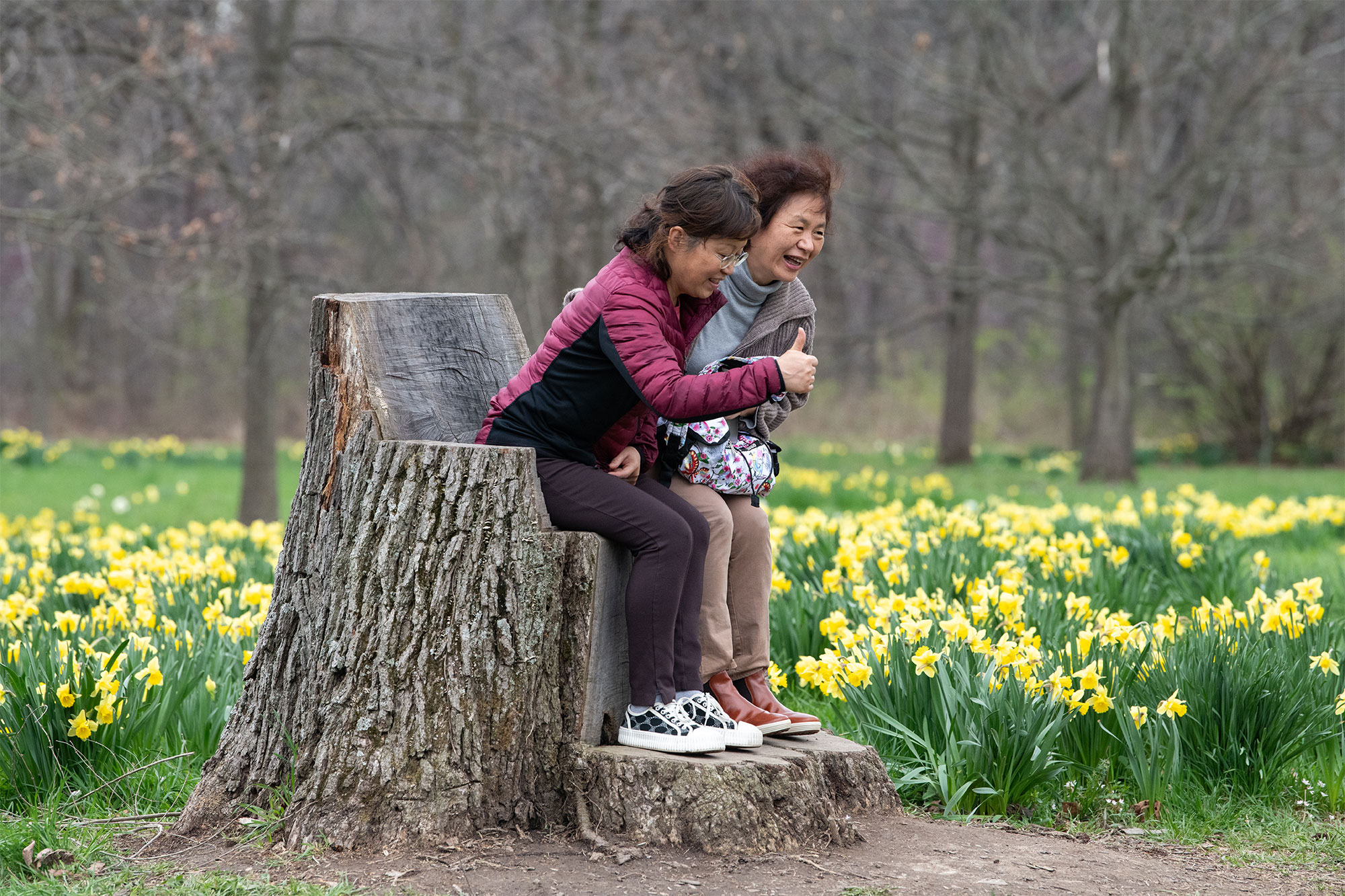
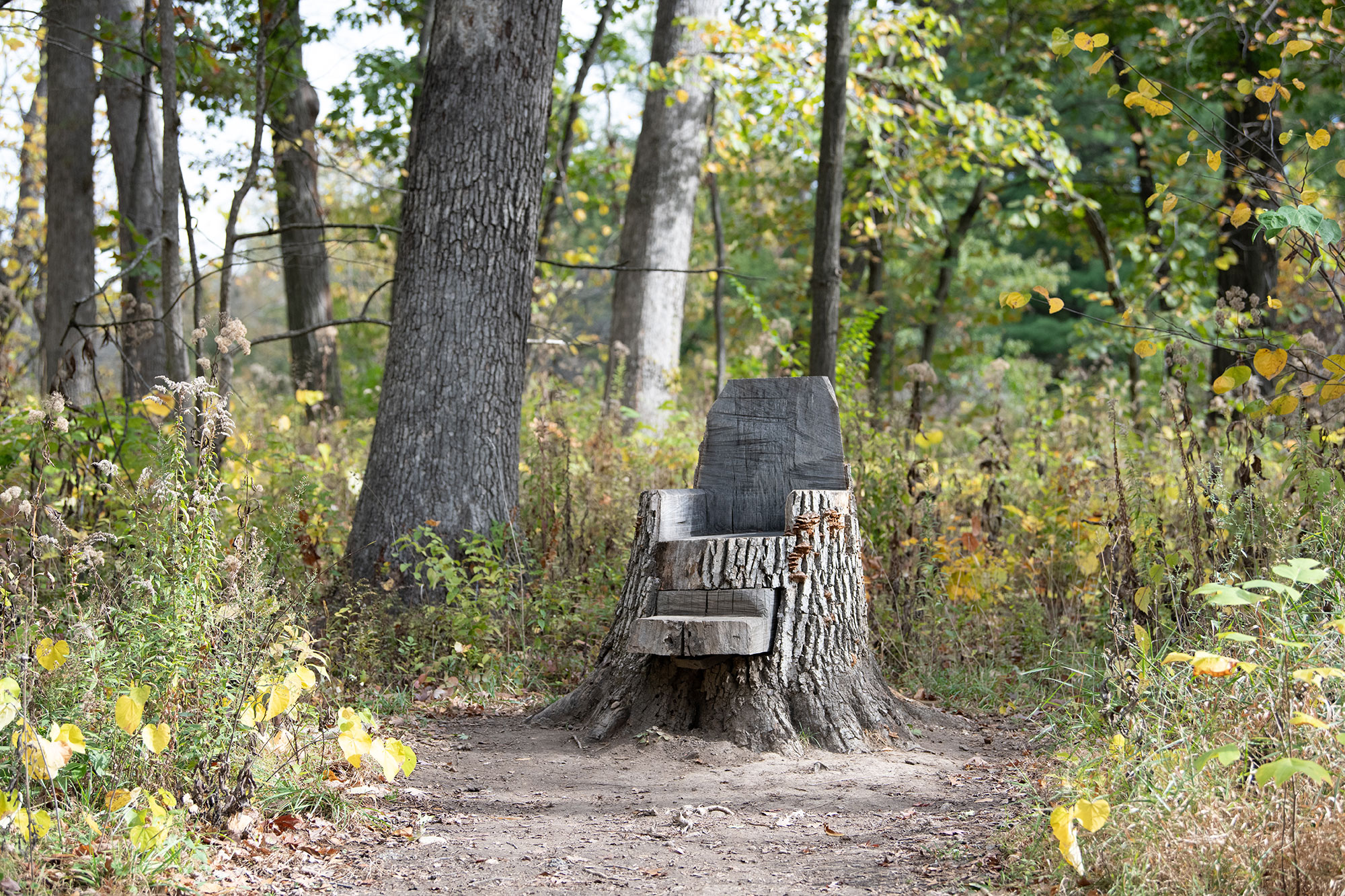
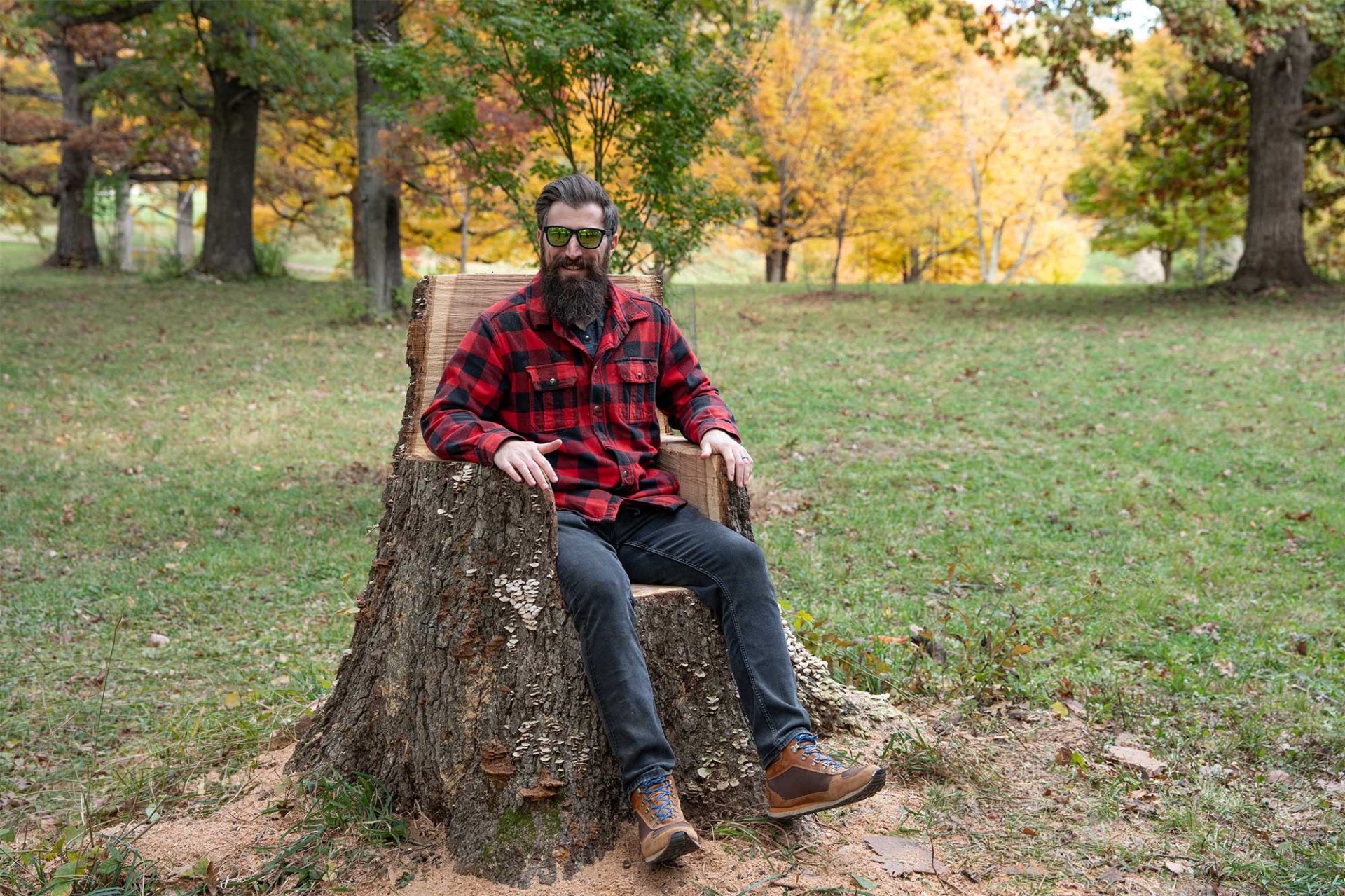
Just around the bend onto the Wilderness Trail from Big Rock Visitor Station, you’ll come across a pair of thrones. These special seats are, in fact, carved from the stumps of mighty trees, as if waiting for a fairy queen and an elf king to hold court. You’ll find another along Joy Path on the West Side. If you wander far enough along the trails of The Morton Arboretum, you can find more than 30 of these wonderful, woodsy seats. Sit yourself down! Take a selfie! Read a book!
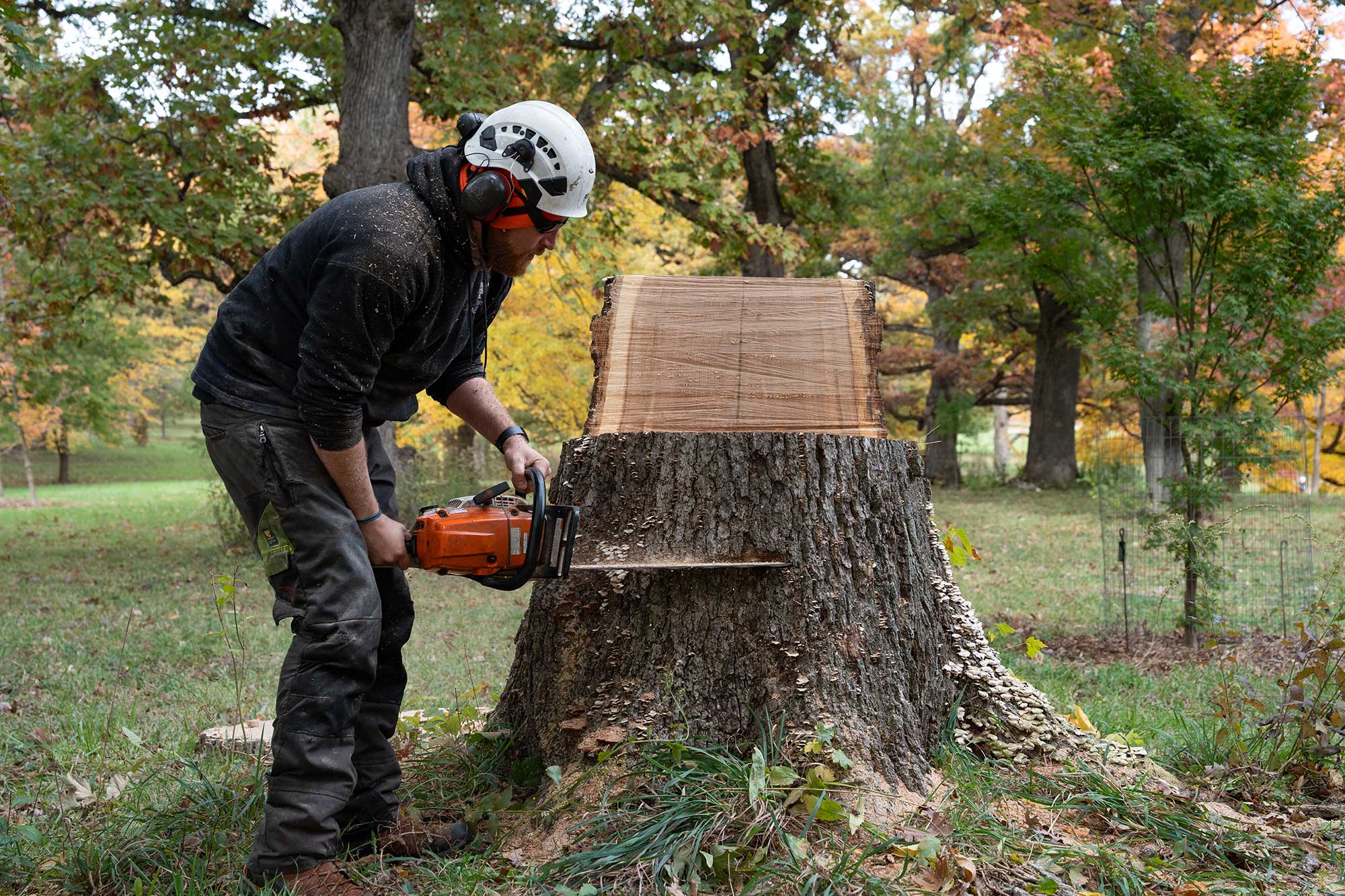
The thrones are carved by the Arboretum’s arborist crew from the stumps of trees they have to take down near its trails and paths. A tree might be dead and unstable, or it might have been damaged by a storm in such a way that it could pose a danger to Arboretum visitors. “A big part of our job is maintaining a safe environment for people to visit our trees,” said Brian Malatia, arborist supervisor. “Unfortunately, sometimes that means we may have to remove a tree.”
Creating the tree thrones is a way of turning a sad moment into a delightful one. The four certified arborists take turns carving them with chainsaws. “It brings out the artistic flair that a lot of tree people have,” he said. “Pruning requires that you have a bit of creativity.”
The raw material must be taken into account. Stumps come in different woods: Oak is hard and long-lasting, but soft pine likely won’t last as long. Location also matters: Does the stump have a nice background for photos? Would it be a nice secluded spot to sit and read a book? “Anything solid next to a trail, we’ll consider for a throne,” Malatia said.
The stumps’ varied sizes and heights offer up possibilities to an arborist with imagination. A throne may be elevated with a step, or have an ottoman or extra fancy arms. Carving it involves an experienced woodsman’s savvy, and often different sizes of chainsaws. “It’s a fun thing for the arborists to do,” he said. And over the last several years, as more and more thrones have appeared along the trails, he added, “It’s been fun to see how the interest grows.”
The majority of the tree thrones are in the Arboretum’s natural areas, away from the Visitor Center. Not all fallen trees are removed or become thrones. Downed trees in the natural areas that are safely away from the trails are usually left where they fall, so they can serve as homes for wildlife and gradually decay.
Trails that lead away from the Big Rock Visitor Station (parking lot P-13) and the Prairie Visitor Station (parking lot P-25) are prime throne territory, although thrones also pop up elsewhere. New Arboretum members can take a scavenger hunt to try and find them all, but anyone who explores the farther reaches of the Arboretum is bound to find some.
Near the Visitor Center, you can find a throne in the Children’s Garden. Carved from a tree that had to be removed elsewhere and weighing thousands of pounds, it had to be lifted into place with the arborist crew’s massive machines.
The thrones are one way that the Arboretum makes the most possible use of the wood when a branch or tree has to be removed. Wood from these trees also is used for tribute benches, and to make fences and conference room tables. The arborist crew supplies logs and branches for nature classes, and for the Loose Parts Play area of the Children’s Garden.
These trees also help our scientists who study soil, roots, and tree growth. Cross-sections go into the Wood Archive of the Forest Ecology Research Program, because the rings of every tree carry a record of its life and the climate conditions it lived through.
To help support the Arboretum’s programs, slabs of wood from downed trees are sold to woodworkers to support the Arboretum’s programs. Whatever is left over becomes the mulch that surrounds trees in the Living Collections and makes a safe surface on the trails that lead to tree thrones.
Some thrones are new, with the scent of sawdust. Others seem dark and ancient, decorated with mushrooms and lichens, smelling like the forest floor. Very slowly, that’s what they are becoming. “The woods are reclaiming the trees,” Malatia said.
Every tree has a lifespan, and in nature, every tree eventually dies and decays. The wood of a dead tree is a rich habitat for fungi and other microorganisms that break it down and release its nutrients into the soil. Its holes and crevices become homes for chipmunks, owls, and butterflies. Gradually, over many years, it dissolves away to feed other trees as well as all the other plants and animals that live with those trees.
The stumps that become the Arboretum’s tree thrones are a long way from disappearing. But when you sit in one, you become, for one magical moment, a part of a tree’s long new beginning.