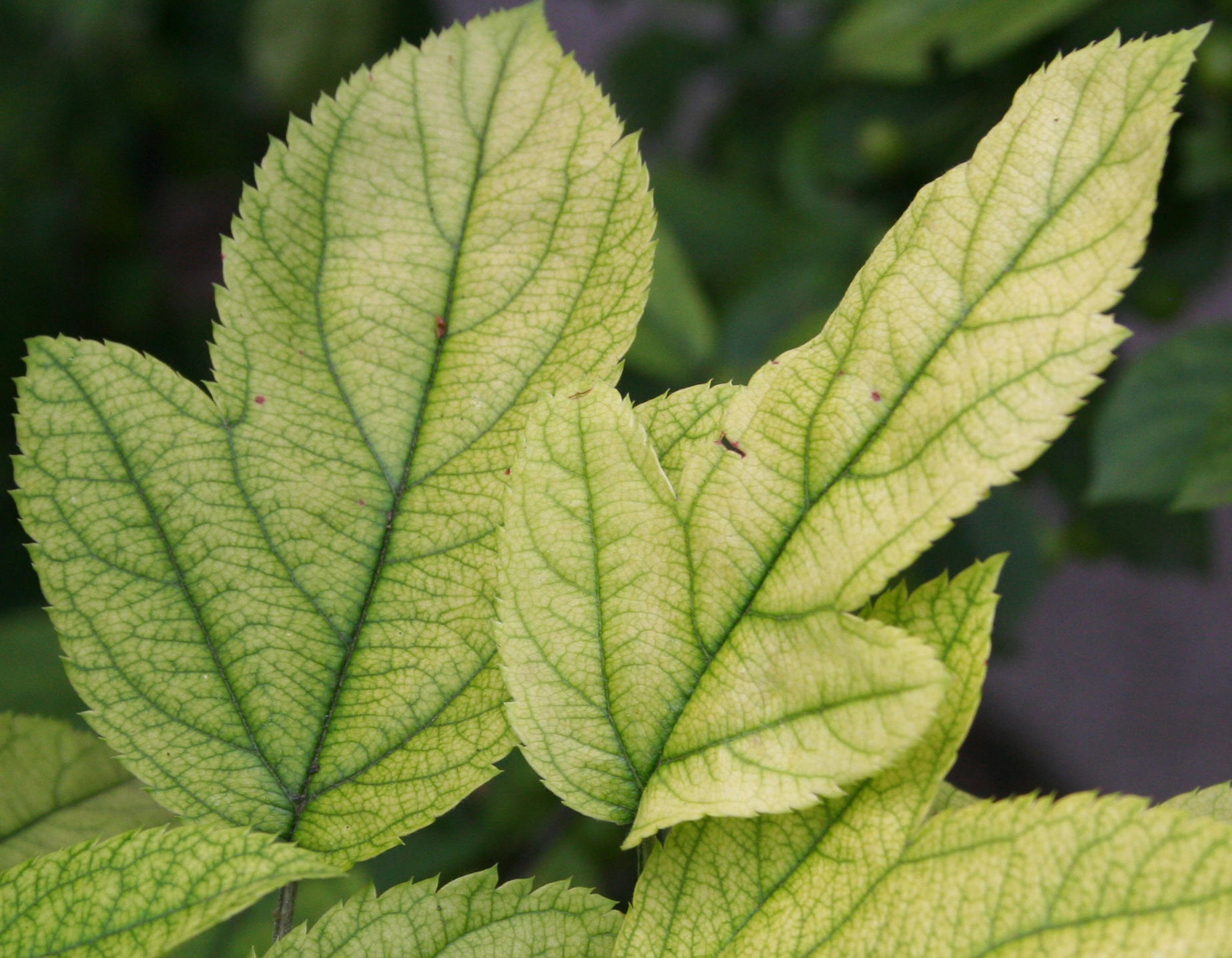
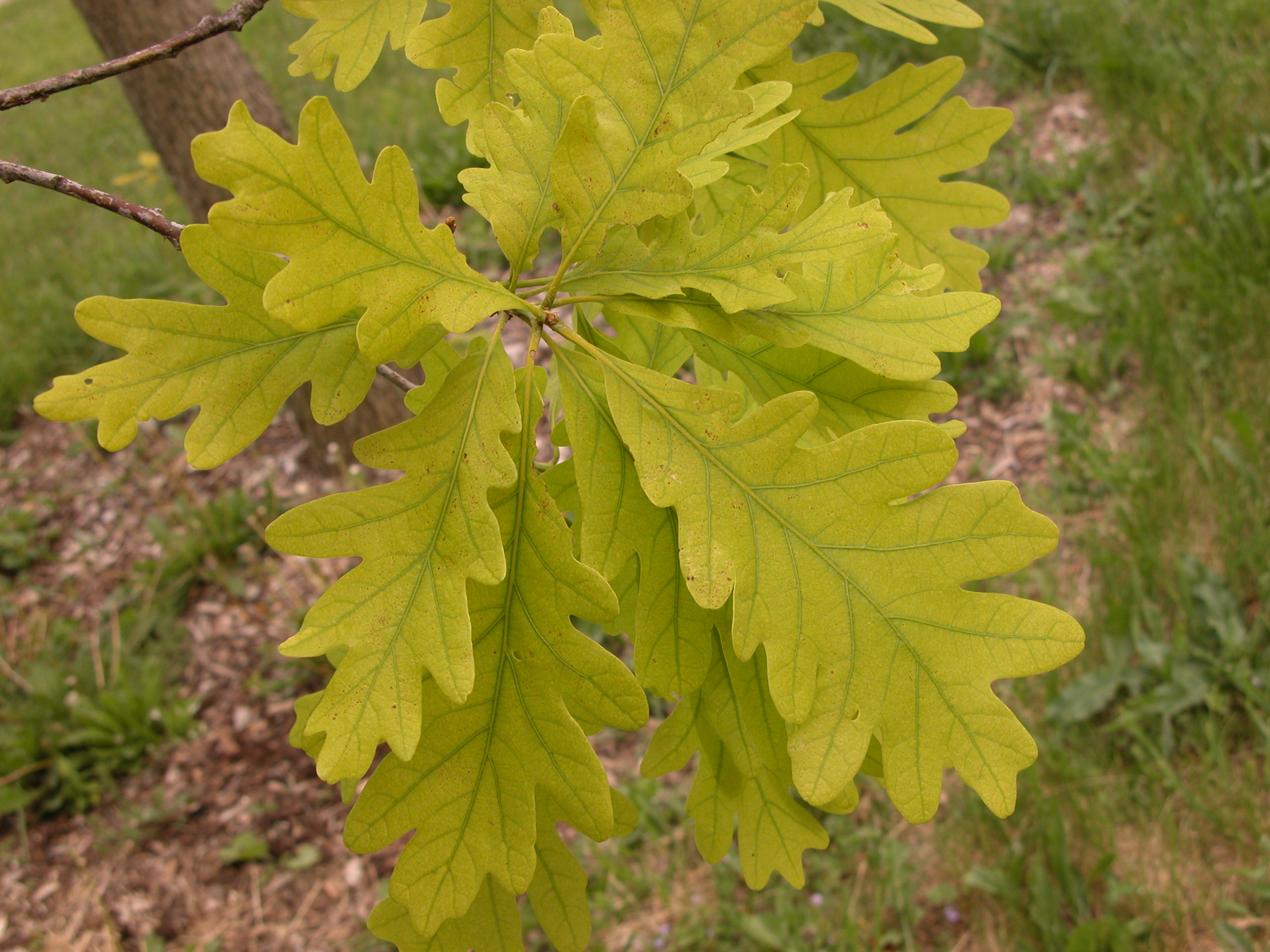
Chlorosis is a yellowing of normally green leaves due to a lack of the pigment called chlorophyll.
Many factors, singly or in combination, contribute to chlorosis. In northern Illinois, some of the most common causes among trees and shrubs include:
- Nutrient deficiencies related to soil alkalinity (high pH)
- Drought
- Poor drainage
- Compaction of the soil
Depending on the cause, chlorosis can be found in a wide range of trees. Common tree species exhibiting chlorosis due to high pH soils are pin oak, red maple, white oak, river birch, tulip tree, sweet gum, bald cypress, and white pine.
Symptoms
Chlorotic plants may show symptoms on only one or two branches, or across the whole plant. The first indication of chlorosis is lighter green leaves in summer, followed later in the season by a general yellowing.
In mild cases, the leaf tissue is pale green, with leaf veins remaining green. In moderate cases, the tissue between leaf veins is bright yellow. In advanced cases, leaf size is stunted and the leaf tissue is very pale yellow to almost white.
Because chlorosis weakens the leaves, the leaf margins may become scorched or leaves may develop brown, angular spots between the veins. The leaves may also wither and drop prematurely in severe cases.
In conifers, an overall yellowing of the needles occurs. If severe, the needles progressively turn brown and drop, and twigs and branches may die back.
Causes
The availability of plant nutrients from the soil varies with soil pH. Most soils in northern Illinois are alkaline, especially the disturbed soils of urban and suburban neighborhoods. The soil’s pH is an indicator of soil acidity or alkalinity. On a pH scale of 1–14, 7.0 is neutral, below 7.0 is acidic, and above 7.0 is alkaline.
A common cause of chlorosis is a deficiency of iron or manganese, both of which are present but unavailable in high pH soils. Iron and manganese are needed by plants to form the green pigment chlorophyll and to complete photosynthesis.
With most plants, micronutrients like iron and manganese are most available when the pH is between 5.0 and 6.5. A soil pH range between 6.0 and 6.5 is considered optimal for nutrient availability. When the soil pH is above 7.0, these micronutrients may be present in the soil, but they are in a chemical form that the plant cannot take up.
The chlorosis caused by deficiencies of these nutrients is often referred to as “interveinal chlorosis” since the veins remain green while the rest of the leaf turns lighter green to yellow-green. In oaks, a lack of iron is often the cause of this type of chlorosis, while in maples it is more commonly a lack of manganese.
Excess potassium, magnesium, and phosphorus in the soil can also contribute to chlorosis. When present in excess, these elements cause some trees to take up inadequate amounts of the micronutrients iron and manganese. Avoiding excessive use of fertilizers will help prevent chlorosis of this type. If iron or manganese deficiency is suspected, there are both long-term and short-term treatment strategies. A soil test can determine the pH as well as the availability of nutrients that cause chlorosis.
Nutrient deficiencies that lead to chlorosis can also happen when environmental conditions stress plants. Heavy rains and flooding can lead to saturated soils with a limited supply of oxygen. Roots need oxygen to function properly. During the time when the soil is saturated, roots are unable to take nutrients from the soil. The problem will resolve when the soil moisture returns to normal, unless the soil stays saturated long enough to damage roots. In that case, the plant will need time to grow new roots.
Stressors such as temperature extremes and drought or restricted root growth can also lead to chlorosis. This is often expressed as yellow leaves without the green veins.
Management
Prevention is the best management. Do not plant chlorosis-susceptible trees in soils that have a high pH level. If practical, replace with species that are less susceptible.
When the leaves of plants become chlorotic, always determine the primary cause by looking at weather conditions and the care being given to the plant. If those things are good, then consider a soil test to determine the pH of the soil. Then, take the necessary steps to prevent further damage.
Short-Term Solutions
Soil treatments and trunk injections can be used in the short term to manage chlorosis due to iron and manganese deficiencies. Chelated iron or manganese (found in garden centers or online under various names) can be applied to the soil, following the label directions for the product. Repeat applications will be needed and timing will be indicated on the product label.
Foliar sprays of nutrients will produce a faster green-up response time, but is only a temporary solution, lasting 60 to 90 days. Spray treatments will only correct leaves that are treated but will not benefit leaves that are produced later in the season. Thoroughly spray the foliage in late spring or early summer when leaves are expanding in size. Repeat applications are usually needed, following the label directions of the product. Large trees may require a professional arborist or landscape service for adequate coverage. Only products labeled for use in this manner should be sprayed on leaves.
Trunk injection is another method of applying iron or manganese-containing compounds to chlorotic trees. Recovery is often quick and treatments are effective for two or three years. Trunk injections should be made by a certified commercial arborist.
Long-Term Solutions
The most lasting results are obtained by improving the tree’s rooting environment.
- Remove existing grass from under the tree.
- Apply a 3-to 4-inch layer of organic mulch. This will reduce weed competition, prevent soil temperature fluctuations during the winter and summer, and help to create more favorable soil conditions for roots to grow.
- Water during dry periods to minimize stress.
- Avoid fertilizing chlorotic plants with potassium and phosphorus unless a soil test indicates a deficiency.