Get Outside and Meet Some Trees that Are Fighting Extinction
The trees and plants you see growing in The Morton Arboretum’s collections, with their colorful autumn leaves, subtle winter bark, and dazzling spring flowers, come from around the globe. Some are extra special: They belong to species that are threatened with extinction.
The Arboretum’s living collections include 76 species of conservation concern, meaning that they are considered threatened or endangered in their wild habitats around the world, according to the International Union for Conservation of Nature (IUCN). The Arboretum is a member of the IUCN and hosts its Center for Species Survival: Trees. Conservation of threatened trees around the world and scientific research to support that conservation are critical parts of the Arboretum’s work.
Each threatened species has a story. The tale of a tree’s challenges often includes destruction of a tree’s habitat by humans for agriculture and development; overuse for timber and fruit; and climate change, which is altering trees’ habitats faster than the species can adapt.
A less obvious threat is lack of genetic diversity. For a species to survive, it needs a wide range of different genes so it can adapt to changes in its environment. As the population gets smaller, the genetic range gets smaller too. Even when a tree that is endangered in the wild is commonly planted elsewhere, the trees along streets and in gardens may be too much alike. One important role of botanical gardens like the Arboretum is to plant threatened trees with diverse genetics, so species have a better chance at a future.
Here are some trees that you can find along Arboretum roads and trails, as you learn about how trees come to be threatened, and what conservationists and scientists do to save them.
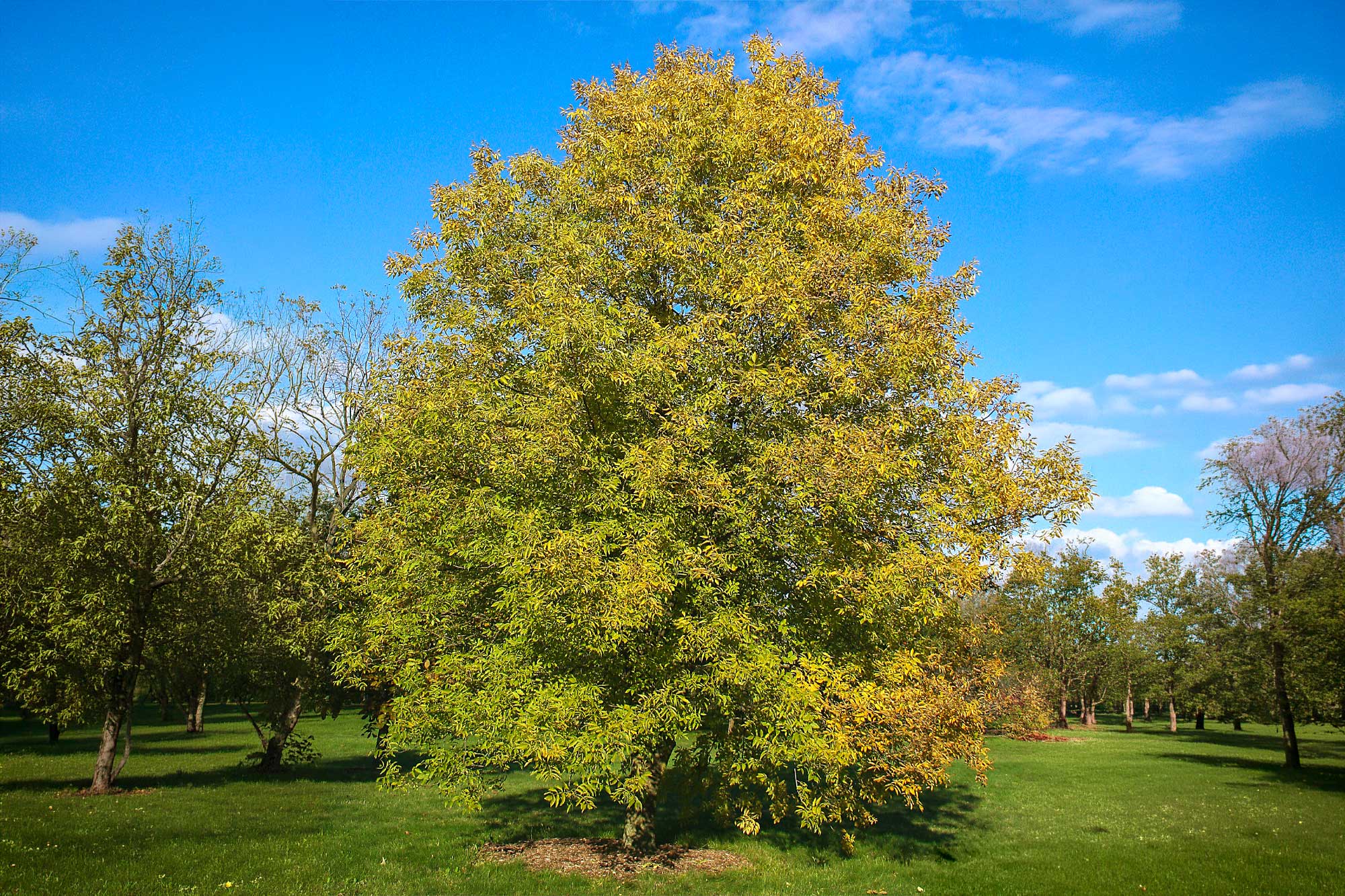
Blue ash (Fraxinus quadrangulata)
Next to Firefly Pond, by a path leading to the Arboretum’s Curatorial and Operations center, is a handsome blue ash tree. It is one of the few ashes left at the Arboretum after the sweeping scourge of the emerald ash borer that killed off millions of ash trees in the early part of this century. Ashes were once among the most common trees in local woodlands and along Chicago-area streets, but blue ash is now one of five North American ash species considered critically endangered due to the invasive insect. While the Arboretum treats its few remaining ash trees with insecticide to prolong their lives, scientists at the Arboretum and elsewhere are working to locate or breed more pest-resistant types of ash. GPS coordinates: 41.8128, -88.0725
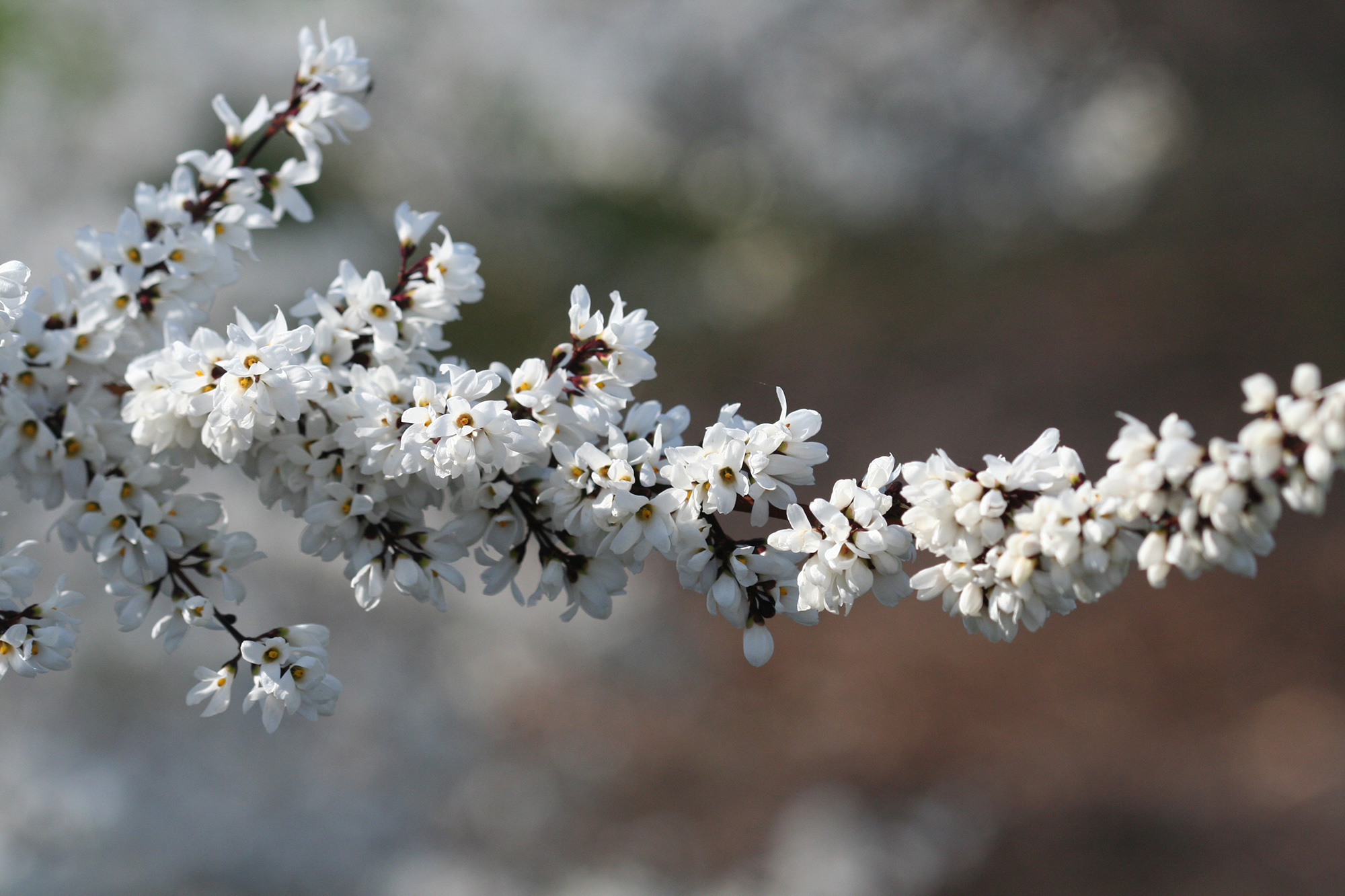
White-forsythia (Abeliophyllum distichum)
In spring, white blossoms appear on this large shrub in the Dwarf Woody Plant Collection, just east of the Firefly Pavilion. In its native Korea, this endangered species survives in small, decreasing populations at only seven known sites. It is threatened by housing and urban development, tourism, and dams. The Arboretum has several white-forsythia plants, which bloom about the same time as the more common yellow forsythia. GPS coordinates: 41.8207, -88.0789
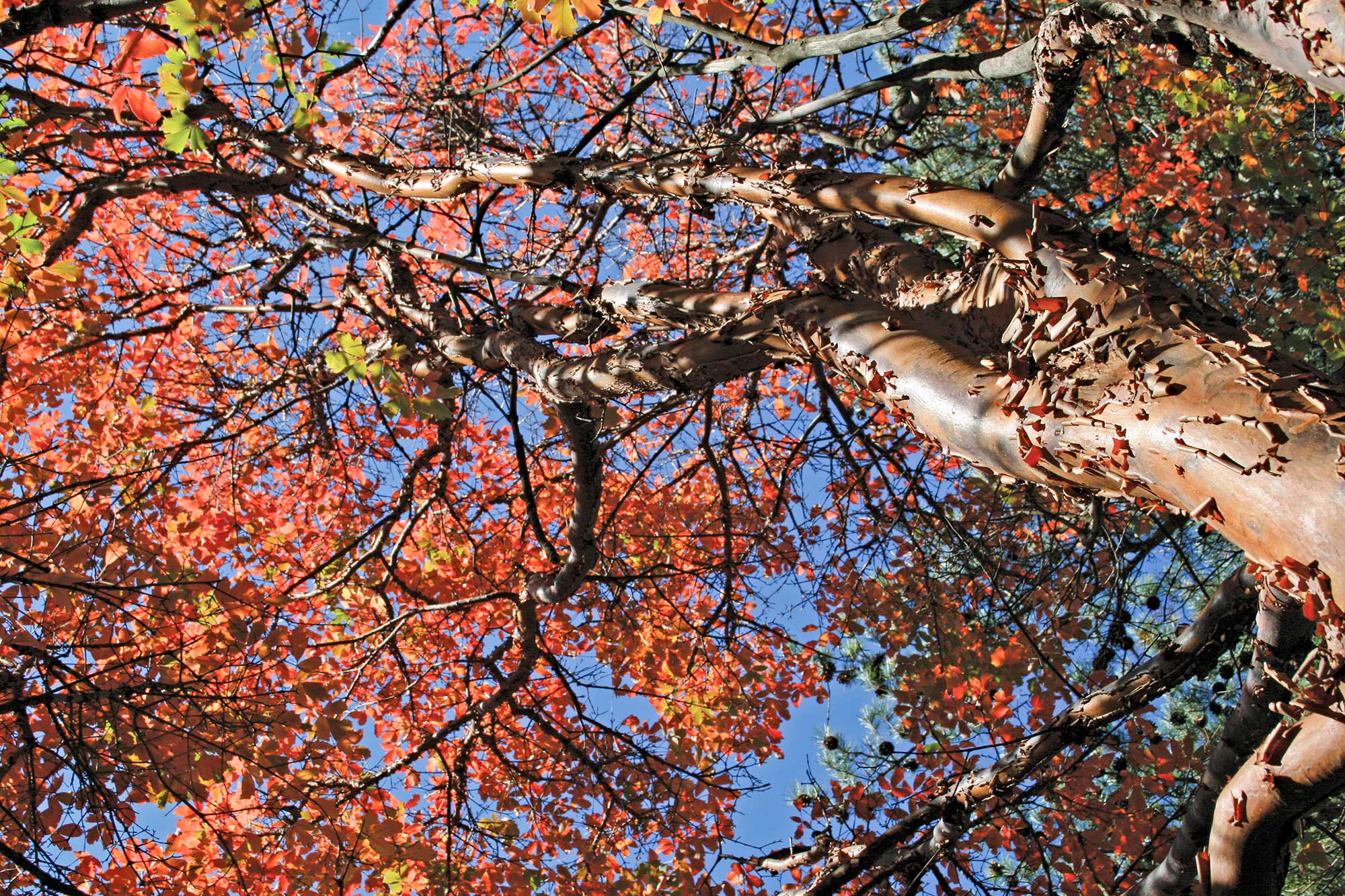
Paperbark maple (Acer griseum)
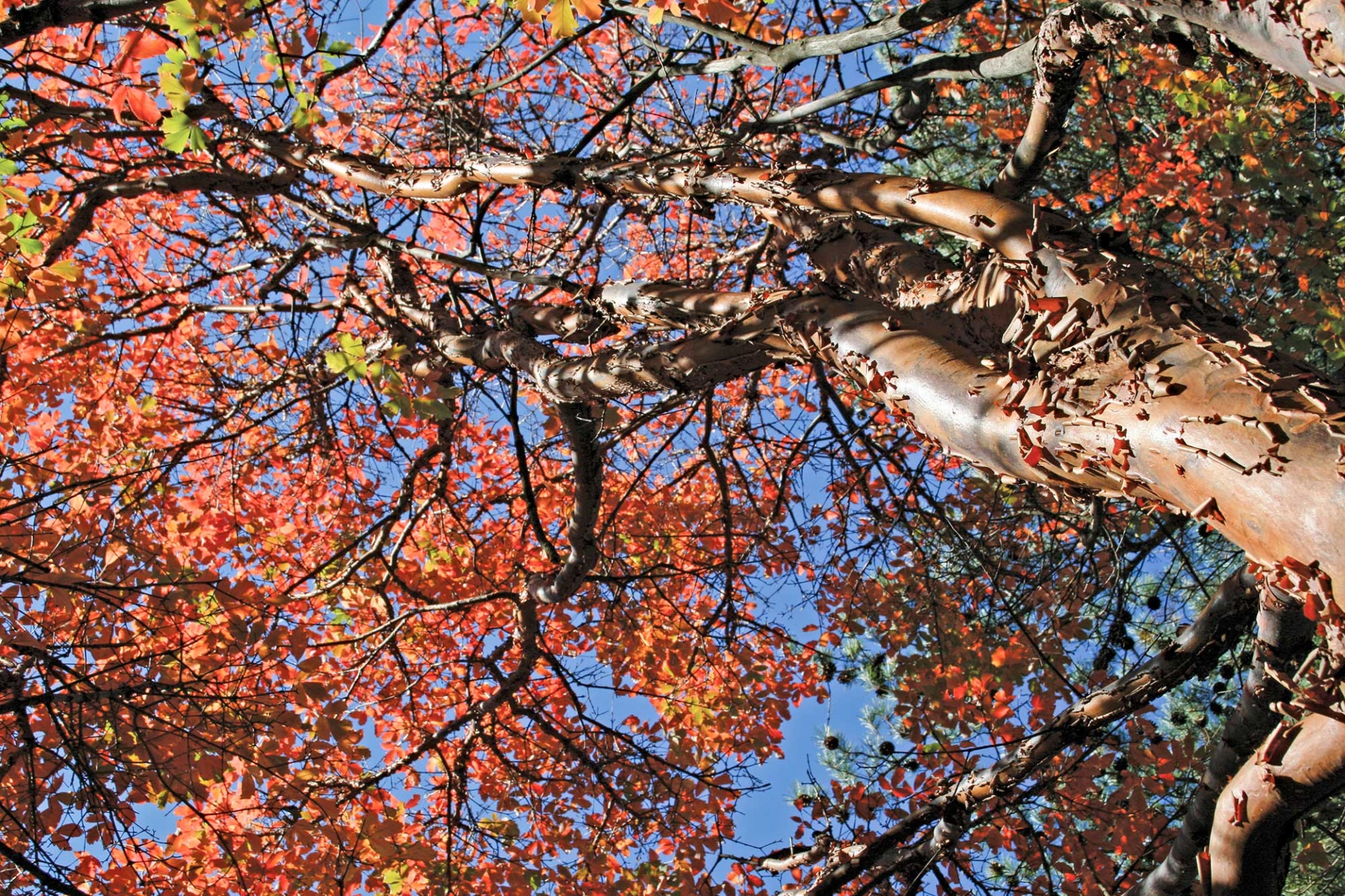
A group of handsome trees with striking, peeling, copper-colored bark stands near Frost Hill, on the left side of the road, just past parking lot P-3. These trees are paperbark maples, listed as endangered by the International Union for Conservation of Nature. In their native central China, development has reduced and fragmented their habitat until only about 12 populations remain. Another problem was revealed through research by the Arboretum and partners: Although thousands of paperbark maples have been planted in the United States and the United Kingdom, they have little genetic diversity. They are all descended from just four individual trees imported from China shortly after 1900. To help, the Arboretum has planted a conservation grove of more than 30 saplings, much more genetically diverse, along the Temperate Asia Upper Loop Trail. Frost Hill tree GPS coordinates: 41.8124, -88.0651.
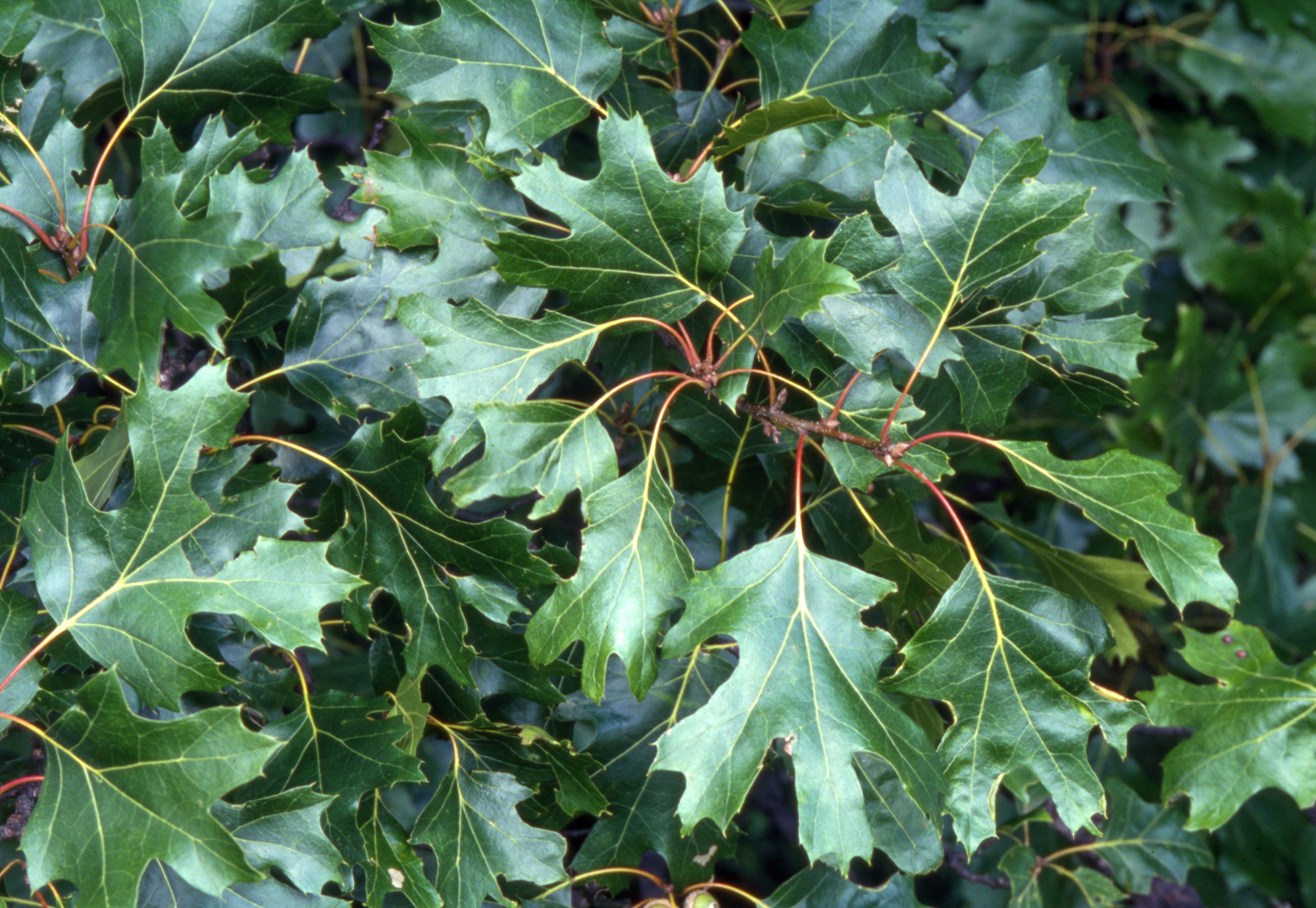
Maple-leafed oak (Quercus acerifolia)
In the Gateway to Tree Science, near parking lot P-8, three young oaks grow along the trail. These are maple-leafed oaks, a species native to the Ouachita Mountains of Arkansas, where only a few hundred trees survive in the face of development, logging, and heavy recreational use of the land. The species is listed as endangered in the Red List of U.S. Oaks, produced at the Arboretum in 2020. Climate change is a special threat because this tree grows only in a small range of conditions. Maple-leaved oaks have been planted here and in the Oak Collection at the Arboretum to help conserve the genetic diversity of the species. GPS coordinates: 41.8132, -88.0498.
Dawn redwood (Metasequoia glyptostroboides)
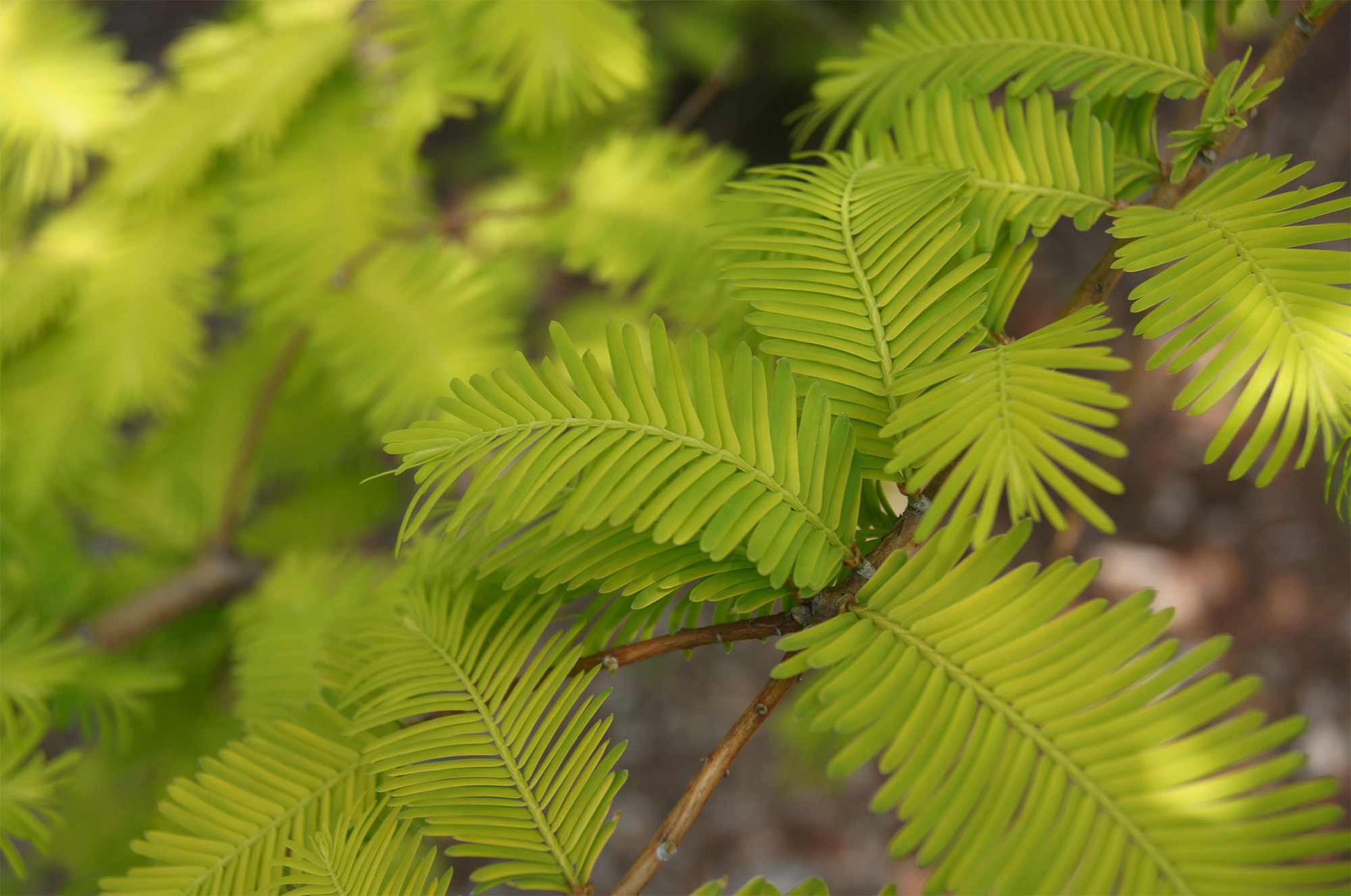
A handsome specimen of dawn redwood grows by the Main Route road near parking lot P-18 in the Temperate Asia Collection. This ancient species is endangered in the wild because the river valleys where it grows in China have come under heavy cultivation over the last few hundred years. Mature trees are often cut for firewood and young trees are grazed by livestock. Although it is endangered in the wild, the dawn redwood is a popular tree for ornamental planting around the world. It is a deciduous conifer, dropping all its soft, ferny needles in fall and growing a whole new set in spring. GPS coordinates: 41.8183, -88.0646.
Gingko (Gingko biloba)
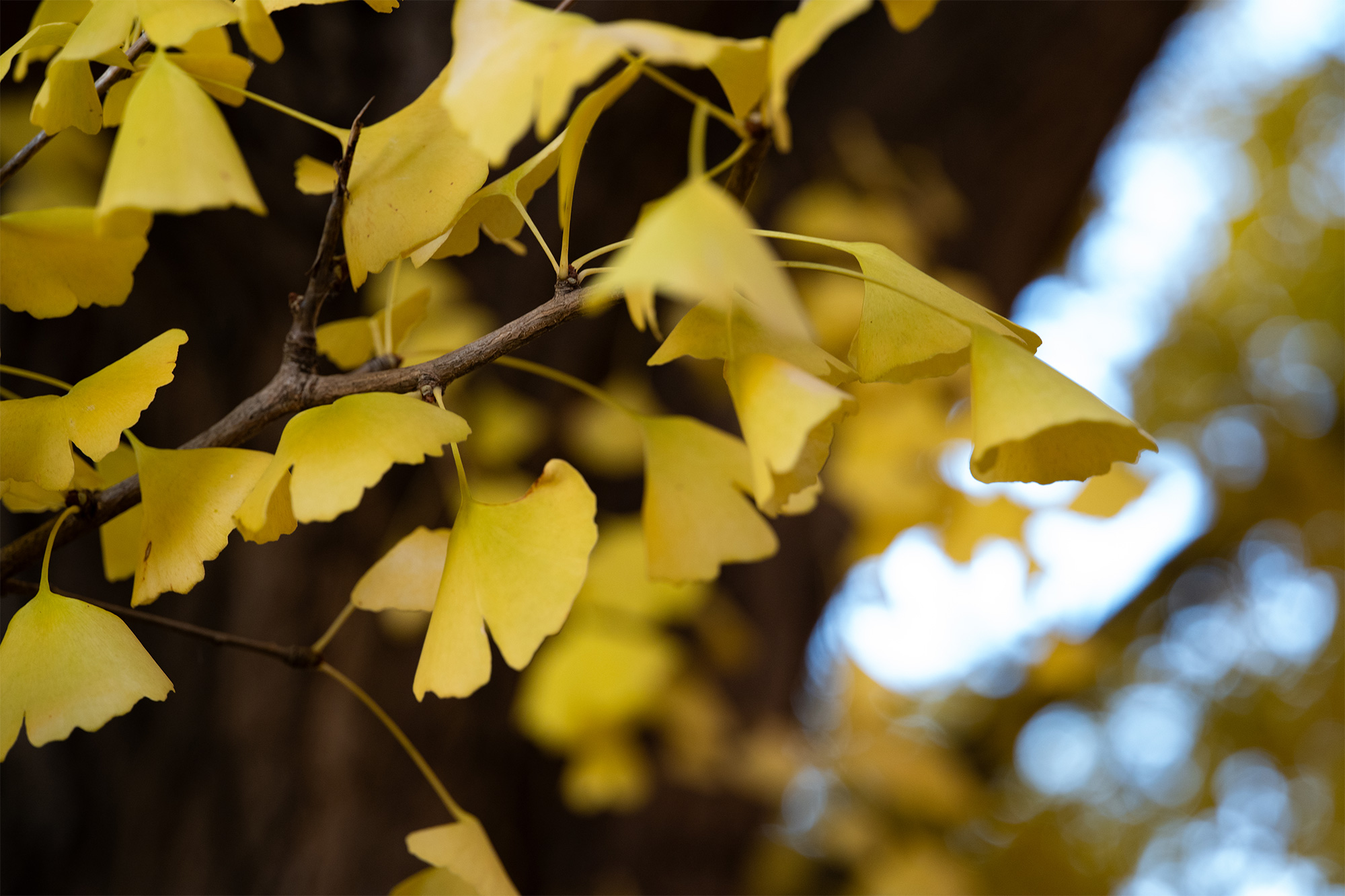
The ginkgo trees of the Temperate Asia Collection are a lemon delight in autumn, when their fan-shaped leaves turn yellow before they fall. A handsome stand of ginkgos grows near parking lot P-18. Although they are commonly planted worldwide, they are an endangered species in the wild in western Asia, with only a handful of wild populations remaining in China. Threats to the last wild ginkgos include habitat loss and deforestation, harvesting of the fruits for traditional medicine, and climate change that is altering their scarce habitats. The Arboretum has many ginkgos, which were a favorite tree of its founder, Joy Morton. GPS coordinates: 41.8178, -88.0666.
Butternut (Juglans cinerea)
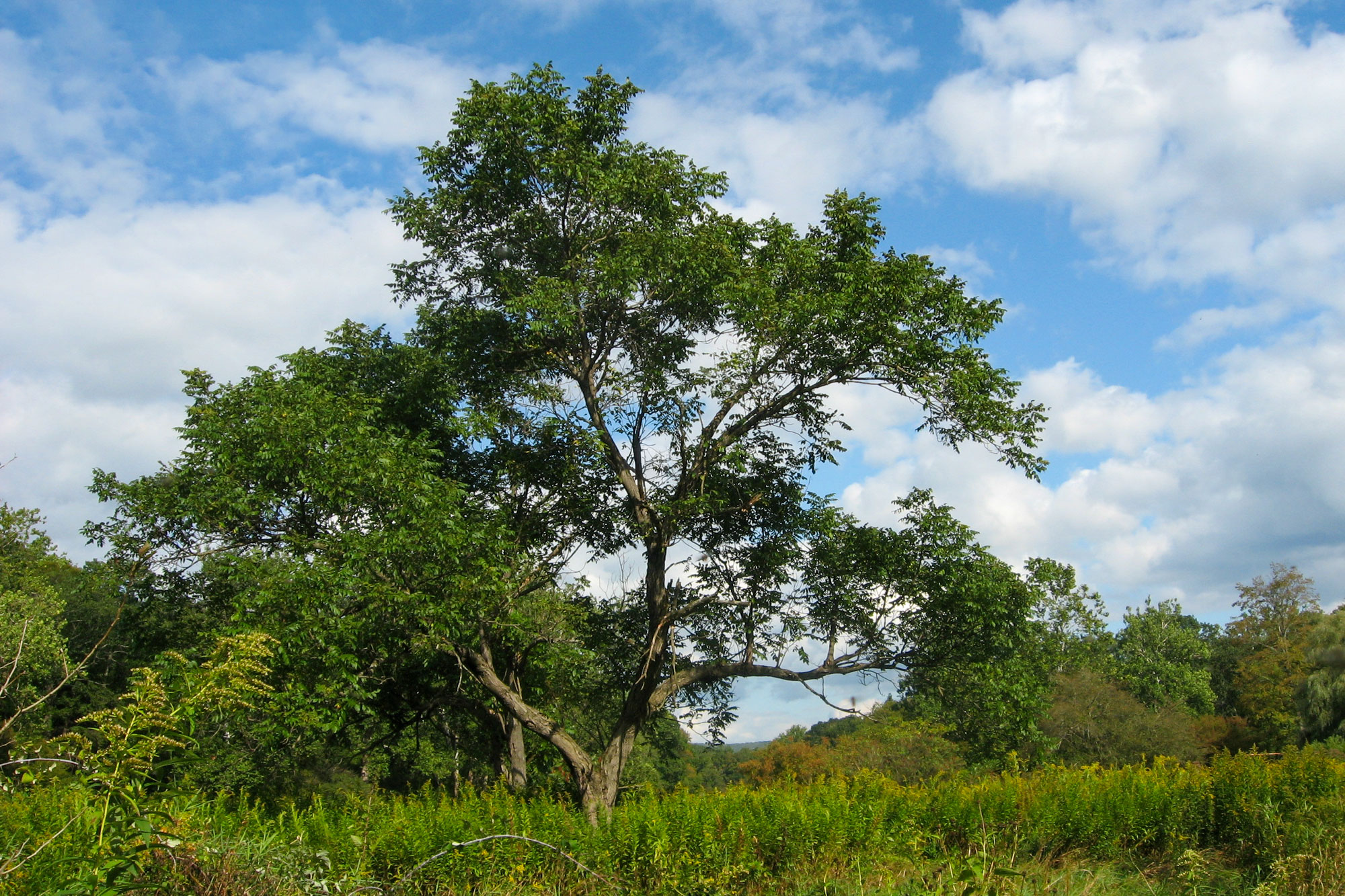
A group of small butternut trees in the Walnut Family Collection at parking lot P-31 were grown from seed collected by Arboretum staff in the American South. They are a glimpse of hope for an endangered species threatened by a deadly disease that has wiped out almost all mature butternuts. Arboretum scientists are part of a wide-ranging effort to learn more about butternuts, conserve them where they still exist, and hopefully restore their population. GPS coordinates: 41.8119, -88.0808.