Where Do All Those Plants Come From?
The bounty that fills The Morton Arboretum’s annual Arbor Day Plant Sale each April—nearly 40,000 trees, flowering shrubs, herbs, perennials, and other plants in 2026—is a testament to the hard work and skills of the Arboretum’s plant growers. But it’s only a fraction of what they do.
The rest of the time, it’s their job to grow the plants that are the essence of the Arboretum: trees that make up its living collections; rare and endangered plants collected around the world; scientific specimens that fuel world-renowned research; native plants that help restore the ecosystems of its natural prairies and woodlands; flowers that fill its gardens with color.
The knowledge and expertise that the plant production team brings to the task are among the Arboretum’s secret superpowers. “Our mission is to make sure that the Arboretum has the plant material necessary to execute its mission,” said Pete Linsner, senior manager of plant production.
It’s a challenging, specialized job that is very different from typical commercial horticulture, such as growing large crops of poinsettias for Christmas. That’s the type of work Linsner was doing before he came to the Arboretum 39 years ago, when it was a much smaller operation. Suddenly, he had to learn to grow dozens of different kinds of trees—most of them from seed.
“It was a steep learning curve,” he said. Growing trees requires juggling a multitude of factors to control the plant’s environment, especially their requirements for the resting state called dormancy. Not all trees grow easily from seed. A thousand things can go wrong.
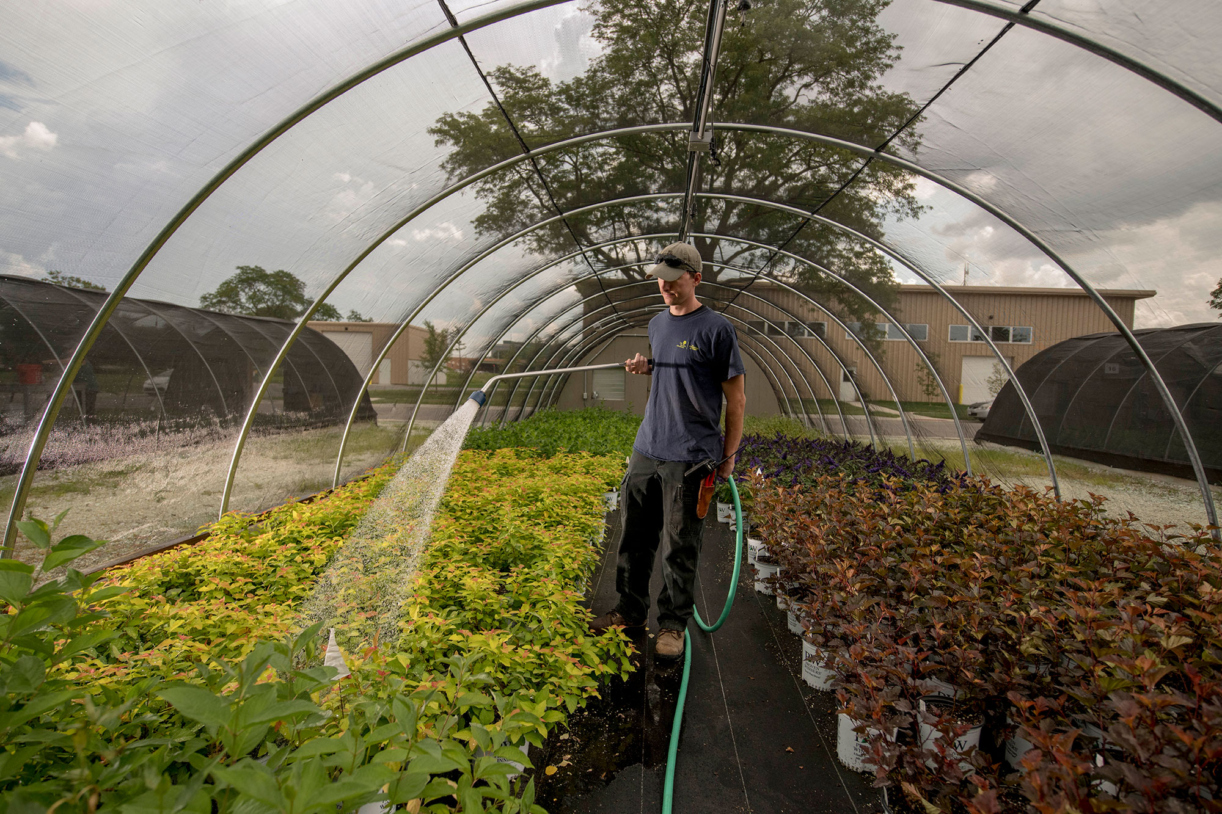
Today, a team of 10 full- and part-time staff grows far more than just trees. About half their job is carefully producing perennials, trees, shrubs, herbs, and vegetables for the plant sale, which started in the 1980s as a mail-order list of a dozen surplus plants. Today’s plant sale is a major event, an opportunity for donors and members to share in the joy of growing plants and support the growth of the Arboretum.
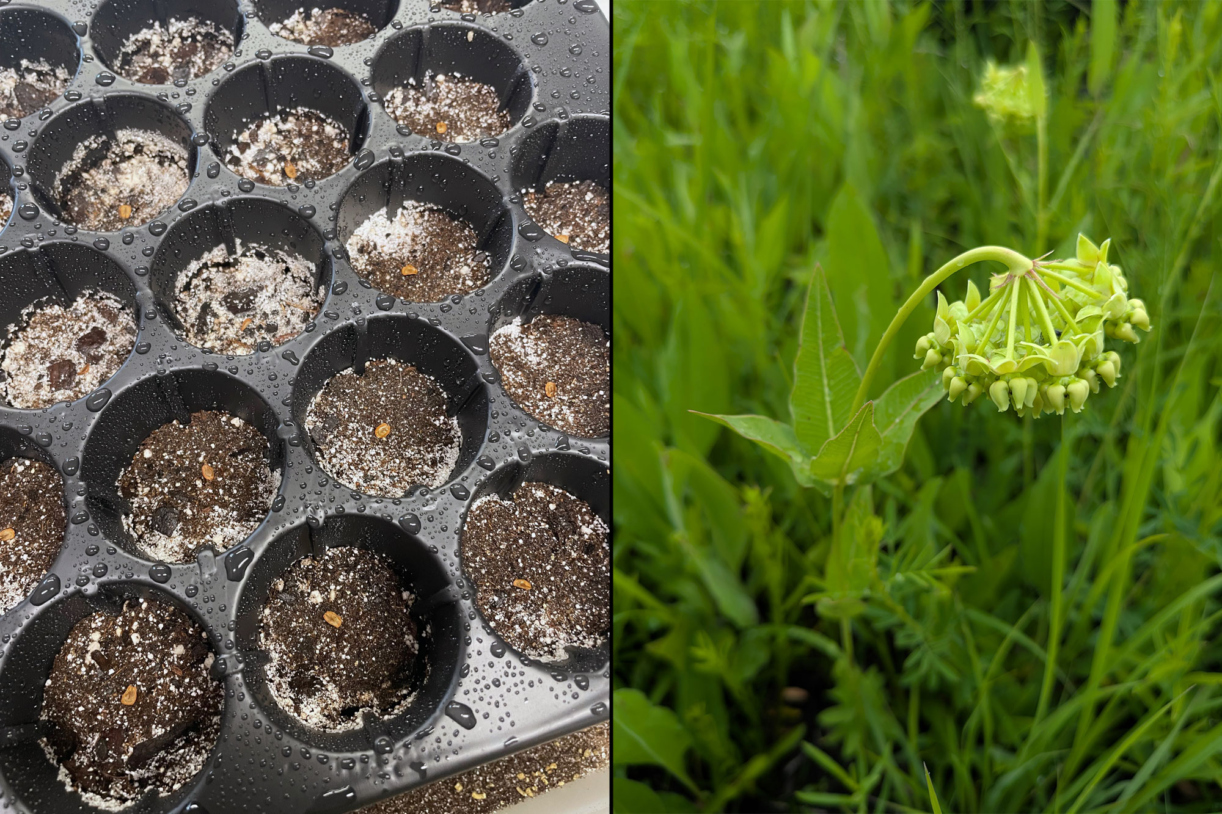
The rest of the propagators’ work spans the plant kingdom. “We have all these rare and endangered plants that are not available to buy,” said Spencer Campbell, senior manager of natural areas. In the Schulenberg Prairie, for example, there are just four known individual plants of Meade’s milkweed, an exceptionally rare, threatened, and extremely finicky tallgrass prairie species. The propagation staff is nurturing seeds collected from those plants in hopes of expanding the species’ foothold.
As part of the Arboretum’s worldwide work to conserve oak species, the growers sow acorns collected by its plant explorers on faraway expeditions or shared by other institutions. Adding these plants to the living collections will help protect genetic diversity in the face of habitat loss and other challenges that threaten these species in the wild.
To grow rare plants that may never have been cultivated before, the Arboretum’s deep history matters. Its growers can consult detailed propagation records that go back decades, once kept on paper file cards and now in a digital database. “Every plant we grow is an experiment,” said Nick Zubenko, plant production supervisor. Capturing data from that experiment is part of the job.
The records encompass failures as well as successes. “We know we’re going to kill plants,” Linsner said. “The important thing is to understand why and how we killed the plant.” That accumulated knowledge, available to guide current and future growers here and at other institutions, is one of the Arboretum’s critical legacies.
For rare oak species, knowing what has worked for other oak species from similar environments is a good place to start. Acorns don’t keep well as seeds. But once they have sprouted, small seedlings grown from precious, hard-to-procure acorns can be kept safely dormant in coolers until the timing is just right for their next stage of life.
Growing from wild-collected seed is important for endangered plants because it helps preserve the range of genetic variation across a species. At other times, the goal is the opposite: to preserve the specific genes of a single plant.
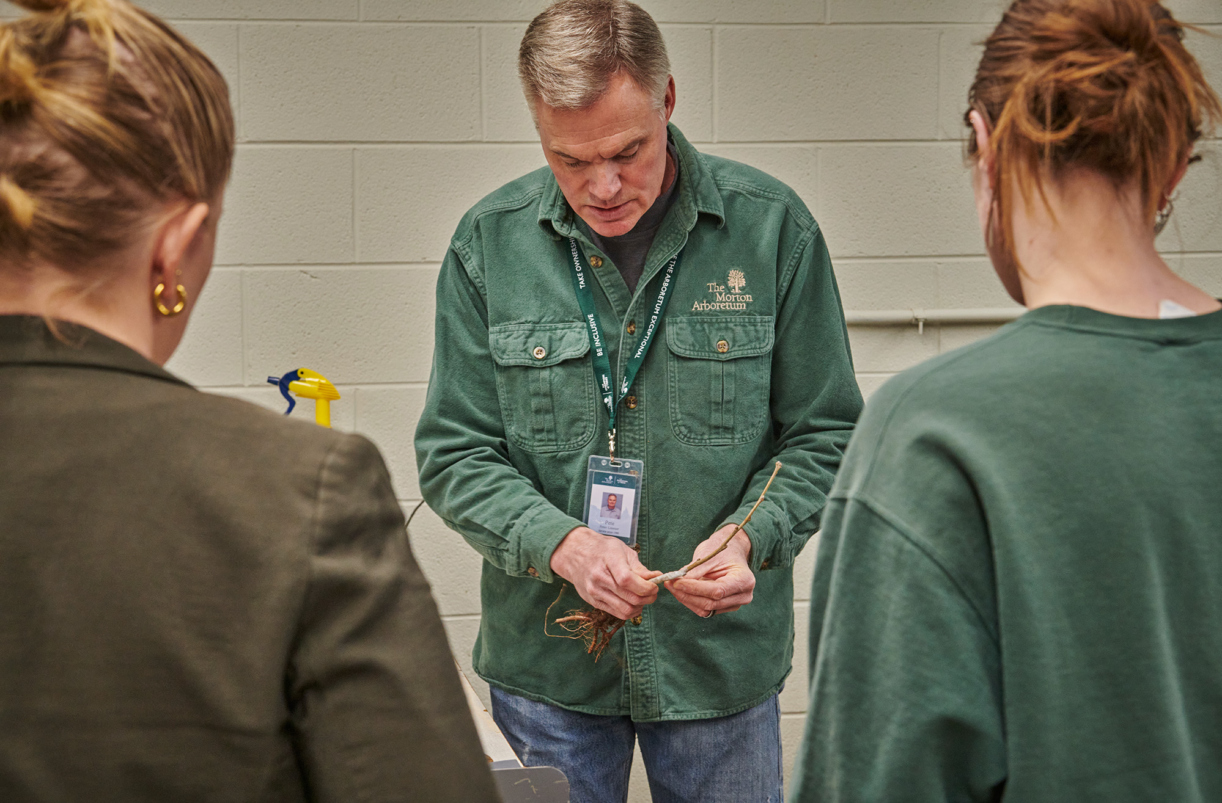
When a valuable tree in one of the living collections is declining or damaged, cloning a new, genetically identical tree can preserve the integrity of the collection and the continuity of scientific work based on that tree. To create clones, growers take cuttings. It’s the same general principle as growing a new houseplant by rooting a cutting in a jar of water, although for trees, it’s a bit more complicated.
Sometimes, depending on the species, a cutting may be coaxed into growing its own new roots. In other circumstances, it may be grafted onto a rootstock of a related species. Grafting, especially for oaks, is one of the Arboretum’s specialties.
Once little trees get a good start in greenhouses, they are gradually exposed to the rigors of the outdoors. It can take up to five years for a tree to grow big enough to be planted out into one of the Arboretum’s landscapes or collections.
Which plants the team grows for the collections is determined by Kim Shearer, director of collections and curator. Guided by the Arboretum’s collections plan and looking far into the future, she leads in creating lists of plants needed for their scientific and conservation value. Every summer, she and the propagation team inspect plants that started growing years before. She decides which ones are ready to be planted out in the landscape and which ones need a little more nursing.
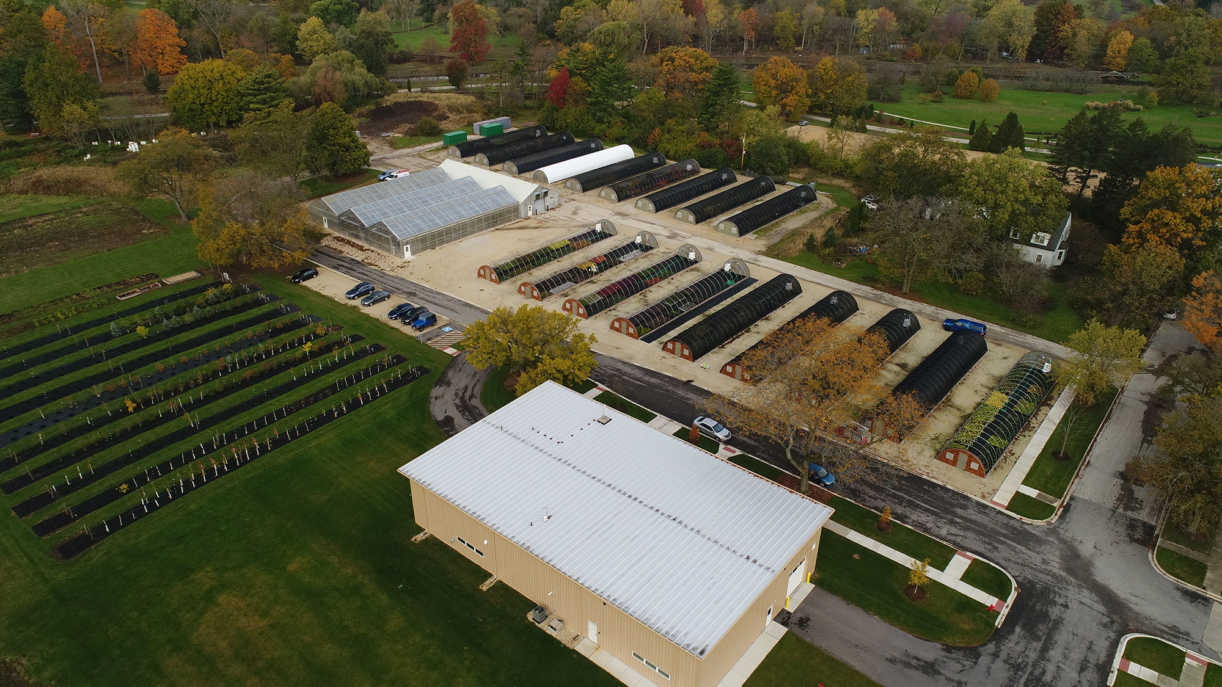
Most of the propagation team’s work goes on in a dedicated facility on the West Side, constructed in 2015–17 with the support of the Arboretum’s generous donors through the Growing Brilliantly capital campaign. Two greenhouses with almost 6,000 square feet of space have automated temperature, ventilation, and humidity controls. Big walk-in coolers hold hundreds of plants in a dormant state. A long row of hoop houses protects young plants from the weather outside.
The facility runs at full capacity, Linsner said. He and Zubenko are constantly juggling competing demands for space to supply all the Arboretum’s needs, including the growth of the Arboretum’s science and conservation work; the success of its natural areas restoration; the popularity of the plant sale; support for the Daniel P. Haerther Charitable Trust New Plant Development Program; and the creation of flower-filled beauty spots such as The Grand Garden.
“The propagation team is an essential part of everything we do and plan to do at the Arboretum,” said Mark Richardson, vice president of collections and horticulture.
The growth of propagation is what keeps it interesting. “I’m always learning something new, because things in plant propagation are constantly changing and evolving,” Linsner said. “I don’t see how anybody could ever be bored growing plants for the Arboretum.”