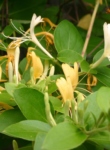
Black swallow-wort (Vincetoxicum nigrum) is an exotic weed in Illinois. The Illinois Exotic Weed Act prohibits the sale or distribution of this plant in Illinois. It is a perennial, herbaceous vine that twines. It can grow up to 8 feet long and does so rapidly enough to cover other vegetation and out compete native plants. Black swallow-wort also produces large quantities of seeds in seed pods (follicles) similar to those found on milkweeds. The seeds, with their tufts of hair, can be easily spread by wind. The plant can also be spread by rhizomes.
In addition to the threat to native plant species, there are dangers to wildlife. The roots are toxic to mammals and the plants are toxic to many insect larvae, including the caterpillars of the monarch butterfly. Black swallow-wort can grow in full sun and partial shade. It can be found in a number of habitats, including disturbed sites, woodlands, grasslands and roadsides. This weed was introduced from Europe. It is now found in several states in the Midwest and New England, as well as in Ontario, Canada.
There are a number of native and nonnative species that could be used in place of black swallow-wort. More desirable species may be found using the Search Trees and Plants page of the Arboretum website. Before purchasing or planting, be sure to check for any local or state guidelines on this species, and make sure that this plant is suitable for its habitat by checking its attributes at mortonarb.org or plants.usda.gov.
- Family (English) Dogbane (formerly milkweed)
- Family (botanic) Apocynaceae (formerly Asclepiadaceae)
- Tree or plant type Vine
- Hardiness zones Zone 4, Zone 5 (Northern Illinois), Zone 6 (City of Chicago), Zone 7, Zone 8